Can You Question Christianity and Still Be Christian?
Chris Cahill · 5 min read · First published 2026-05-19
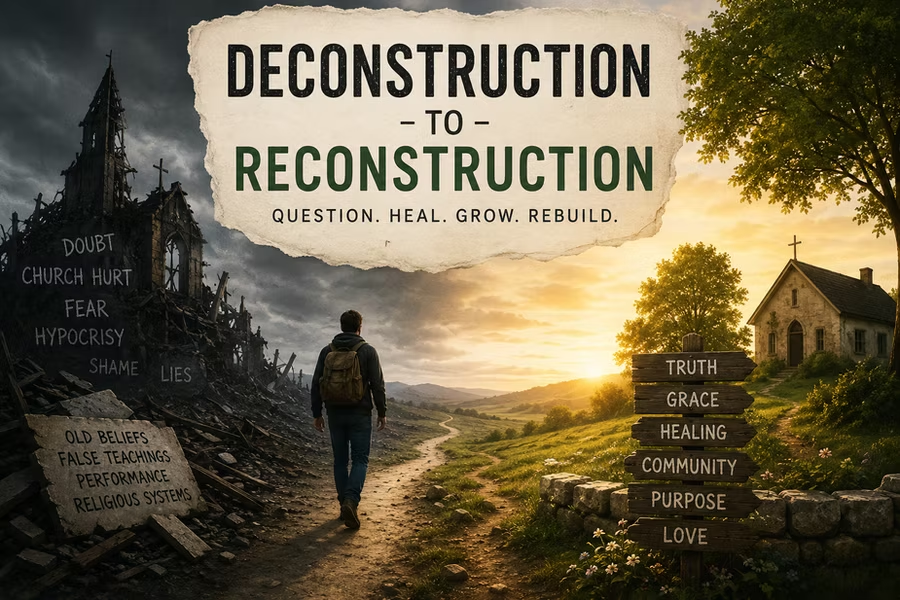
What if questions are not the opposite of faith?
What if they are one of the ways faith grows?
For many people, Christianity was presented as something fragile—something that could not survive too much curiosity, too much doubt, or too many hard questions. They were taught that strong believers always appear certain, confident, and unwavering.
So when questions came, many quietly panicked.
Questions about suffering.About science.About prayer.About the Bible.About hypocrisy in the church.About hell.About politics.About why some Christians seem so unlike Christ.
And for countless people, the fear was not merely:“What if I’m wrong?”
The deeper fear was:“What if asking makes me a bad Christian?”
But perhaps questioning Christianity does not automatically destroy faith.
Perhaps sometimes it deepens it.
The Bible Is Filled With Questioning People
One of the strangest misconceptions about Christianity is the idea that doubt and questioning are somehow foreign to Scripture.
They are everywhere.
Job questioned God’s justice.David questioned God’s silence.Jeremiah questioned suffering.Thomas doubted the resurrection.Even John the Baptist—after preparing the way for Jesus—eventually sent messengers asking:
“Are you the one who is to come, or should we expect someone else?” (Matthew 11:3)
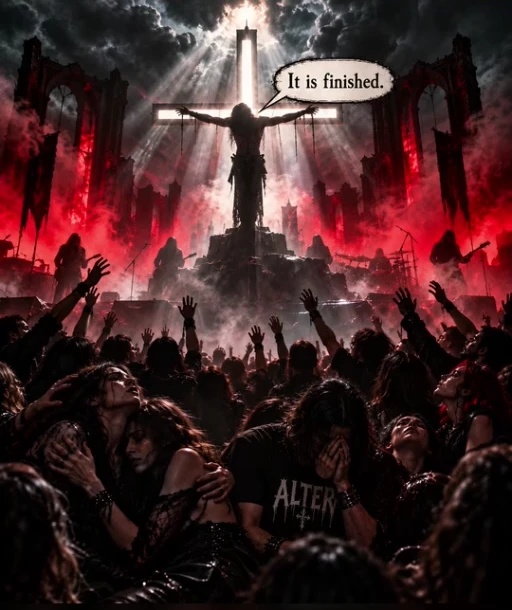
And perhaps most shocking of all, Jesus Himself cried out from the cross:
“My God, my God, why have you forsaken me?” (Matthew 27:46)
The Bible is not a collection of people who never struggled.
It is a collection of human beings wrestling honestly with mystery, pain, fear, hope, and faith.
Questioning Is Part of Human Growth
Bring the part of the story that is difficult to say. There can be room for responsibility and repair without making humiliation the price of being heard.
As people mature emotionally and intellectually, they naturally begin asking:
Why do I believe this?
Is this actually true?
What do I do with contradictions?
What happens when my experiences challenge my assumptions?
This process is not limited to religion.
It happens with politics, identity, family systems, culture, and worldview.
In developmental psychology, growth often requires moving from simplistic black-and-white thinking into greater complexity, nuance, and self-awareness.
In other words:questions are often signs of engagement—not rebellion.
Apathy asks nothing.Curiosity still cares enough to wrestle.
Fear-Based Faith Often Treats Questions Like Threats
Some religious environments unintentionally create fear around questioning.
Why?
Because certainty can feel emotionally safer than ambiguity.
If a system depends heavily on control, image, or rigid authority, honest questions may feel destabilizing.
So people hear messages like:
“Just have faith.”
“Don’t lean on your own understanding.”
“Doubt is dangerous.”
“Questioning opens doors to deception.”
And while wisdom and humility certainly matter, suppressing questions rarely eliminates them.
More often, it creates internal conflict, shame, and isolation.
When uncertainty cannot be expressed safely, a person may feel alone with their questions. Making room to speak can be an act of care.
The soul was not designed to survive by pretending.
Jesus Never Seemed Threatened by Honest Questions
One of the most remarkable things about Jesus is how often He responded to sincere seekers with patience rather than condemnation.
Nicodemus questioned.The Samaritan woman questioned.Thomas doubted.The disciples repeatedly misunderstood Him.
Yet Jesus consistently invited people deeper into truth rather than shaming them for struggling.
When Thomas doubted the resurrection, Jesus did not humiliate him.
Instead, He said:
“Put your finger here; see my hands.” (John 20:27)
That response matters deeply.
Because it reveals a God seemingly far less threatened by honest wrestling than many religious systems are.
Faith Is Not the Same Thing as Certainty
This may be one of the most important distinctions of all.
Many people confuse faith with certainty.
But certainty says:“I have no questions.”
Faith says:“I will continue seeking truth even when questions remain.”
The Apostle Paul wrote:
“For now we see only a reflection as in a mirror.” (1 Corinthians 13:12)
That is not weak faith.
That is humble faith.
Mature spirituality often involves learning to live with mystery without losing compassion, humility, or hope.
Some Questions Need Better Answers
Part of the reason many Christians struggle privately is because they were given overly simplistic answers to deeply complex issues.
Questions about:
suffering,
evolution,
biblical interpretation,
mental health,
sexuality,
church history,
violence in Scripture,
and religious hypocrisy
cannot always be answered with quick slogans.
And when shallow answers collapse, some people assume Christianity itself must collapse too.
But perhaps the problem was never Christianity.
Perhaps the problem was being handed a version too shallow to survive reality.
Strong faith is not built by avoiding difficult conversations.
It is strengthened through honesty, humility, wisdom, and deeper understanding.
Questioning Can Refine Faith
Ironically, many people who wrestle deeply with Christianity eventually emerge with a stronger and more compassionate faith than before.
Why?
Because shallow certainty often breaks easily.
But examined faith becomes more resilient.
It learns:
humility over arrogance,
compassion over tribalism,
wisdom over slogans,
and relationship over performance.
James wrote:
“You believe that there is one God. Good! Even the demons believe that—and shudder.” (James 2:19)
In other words, faith is not merely intellectual agreement.
It is transformational trust expressed through love, character, and action.
The Danger of Never Questioning
Sometimes the greater danger is not questioning too much.
It is never questioning at all.
History is filled with examples of religious certainty being used to justify:
violence,
oppression,
manipulation,
abuse,
and tribal hatred.
Without humility and self-examination, certainty can become spiritually dangerous.
Jesus repeatedly warned against religious pride.
“Woe to you… hypocrites.” (Matthew 23:27)
His harshest critiques were often directed not at doubters—but at arrogant religious leaders convinced they already possessed all truth.
That should humble all of us.
Love Remains the Center
One of the clearest themes in the teachings of Jesus is that love—not performative certainty—reveals authentic spirituality.
“By this everyone will know that you are my disciples, if you love one another.” (John 13:35)
Not:“If you never struggle.”“If you never question.”“If you always appear confident.”
Love remained central.
Always.
Perhaps mature Christianity is not about pretending to have every answer.
Perhaps it is about becoming people shaped by grace, truth, humility, courage, and compassion while continuing to seek wisdom honestly.
Maybe God Is Bigger Than Your Questions
Many people secretly fear that asking difficult questions might somehow drive God away.
But if God is truly infinite, truth itself should not fear examination.
Questions may unsettle shallow beliefs.They may challenge assumptions.They may expose unhealthy systems.
But honest questioning can also deepen understanding, empathy, and spiritual maturity.
If Christianity is true, it does not need protection from curiosity.
And if God is love, perhaps He is not waiting to punish sincere seekers for wrestling honestly with complexity.
Perhaps He is already present within the wrestling itself.
The Invitation to Honest Faith
You do not have to pretend to be fearless to have faith.
You do not have to suppress curiosity to love God.
You do not have to silence your mind to protect your spirituality.
Questions do not automatically make you less Christian.
Sometimes they make you more honest.
And perhaps honest faith—the kind willing to wrestle, learn, grieve, rethink, and still seek love—is the kind of faith capable of surviving the real world.
Not because it has no questions.
But because it trusts that truth and grace are strong enough to hold them.
Explore the research, definitions, and limits behind the discussion →
There is room to keep seeking without pretending the hard parts have disappeared. May we offer one another wise companionship, patient grace, and a place to belong while the questions remain.
Wisdom · Unity · Grace