Faith ‘in’ or Faith ‘of?’ - One little word could mean a Big Difference.
Chris Cahill · 5 min read · First published 2024-04-25
A small word can open a large question about trust. Here we look at a translation discussion and the way Christians understand faith and Christ’s faithfulness.
A place to begin
In the realm of theology, it's remarkable how one seemingly insignificant word can have profound implications for our understanding of faith and salvation. While some might consider this topic a playground for theology nerds, the truth is that its implications are universal and touch upon the core of our beliefs as Christians. I've personally spent considerable time wrestling with this one word, recognizing its potential to shape our understanding of God's redemptive plan and our relationship with Him.
In Paul's Epistle to the Romans, particularly in Romans 3:22, we encounter a passage that highlights the significance of this word. The verse reads, "Even the righteousness of God which is by faith ‘of’ Jesus Christ unto all and upon all them that believe: for there is no difference." Here, some modern translations have rendered it as faith "in" Jesus Christ, emphasizing the believer's personal trust and reliance on Jesus for salvation. This perspective underscores the importance of individual faith as a response to the gospel message.
Certainly, the majority view today emphasizes the importance of placing our faith "in" Christ for salvation. Scriptures such as John 3:16 affirm this perspective, stating, "For God so loved the world, that he gave his only Son, that whoever believes in him should not perish but have eternal life." This verse highlights the necessity of believing in Jesus as the Son of God to receive eternal life.
Similarly, Romans 10:9-10 emphasizes the act of confessing Jesus as Lord and believing in Him in our hearts for salvation, stating, "Because, if you confess with your mouth that Jesus is Lord and believe in your heart that God raised him from the dead, you will be saved. For with the heart, one believes and is justified, and with the mouth one confesses and is saved." This passage underscores the importance of a personal decision to trust in Jesus as Savior and Lord.
Furthermore, Acts 16:31 encourages individuals to believe in Jesus for salvation, stating, "Believe in the Lord Jesus, and you will be saved, you and your household." This verse demonstrates the invitation extended to all to place their trust in Jesus Christ for the forgiveness of sins and the gift of eternal life.
These verses as commonly understood today all highlight the biblical emphasis on faith "in" Christ as the means of salvation. They underscore the personal responsibility we each have to respond to the gospel message by placing our trust in Jesus as our Lord and Savior. While acknowledging the importance of Jesus' faithfulness in securing our salvation, they also emphasize the necessity of our own faith response in appropriating the benefits of His redemptive work.
Reading with care
However, in the beloved King James Version and, more importantly, the original Greek text, the phrase is translated as faith "of" Jesus Christ. Pause and think about that. This subtle difference shifts the focus from the believer's faith to the faithfulness of Jesus Himself. It suggests that our salvation is not primarily dependent on our own efforts or actions but is rooted in the unwavering, perfect faith of Jesus in the redemptive plan of God the Father. This interpretation emphasizes Jesus' role as the faithful mediator between God and humanity and underscores the sovereignty of God in our salvation.
Historically, certain churches and church fathers have held to the view that salvation is ultimately based on the faithfulness ‘of’ Jesus Christ. This perspective has been prominent in Reformed theology and has been championed by theologians such as John Calvin. It emphasizes the assurance of salvation found in Jesus' perfect obedience and trust in the Father's redemptive plan over our personal decisions.
Indeed, the concept of salvation as not our own doing is a recurring theme in the Bible. Ephesians 2:8-9 reinforces this notion, stating, "For by grace you have been saved through faith. And this is not your own doing; it is the gift of God, not a result of works, so that no one may boast." This verse underscores the idea that salvation is a gift from God, not something earned through our own efforts or decisions. It eliminates any grounds for boasting, as it is solely by God's grace that we are saved.
Furthermore, this understanding of salvation challenges the notion that faith itself is a decision we make. If salvation is entirely a gift of God's grace, then even our faith cannot be viewed as a decisive act on our part, nor a reason to boast one’s decision to believe or to diminish another person's lack of belief in the Christian claims.
Instead, in this perspective, faith is understood as a response to God's initiative, a recognition of His grace and mercy extended to us. This perspective humbles us, recognizing that our faith is not a badge of honor that we can boast about but rather a gift from God that we receive with gratitude and humility. It shifts the focus away from our own actions and decisions and redirects it towards the sovereignty and grace of God in our salvation.
Think about what this implies for all of mankind. It reminds us of the profound depth of God's grace and the central role of Jesus Christ in our redemption. It challenges us to trust not in our own abilities or merits but in the perfect faithfulness of Jesus, who willingly offered Himself as a sacrifice for our sins. It invites us to rest in the assurance that our salvation is secure in the hands of a faithful and loving Savior.
Carrying this into life
Ultimately, my position is that perhaps both views can be harmonized, recognizing that we are made righteous through our faith "in" the faith "of" Christ. However, this should cause us to stop and contemplate the Grace and sovereignty of God with perhaps more reverence and humility. Ultimately, though, perhaps we can understand this challenge as including our faith in Jesus as connected to His faithfulness and trust in the Father's redemptive plan. In this union of faith, we find amazing grace along with the assurance of our salvation and the hope of eternal life.
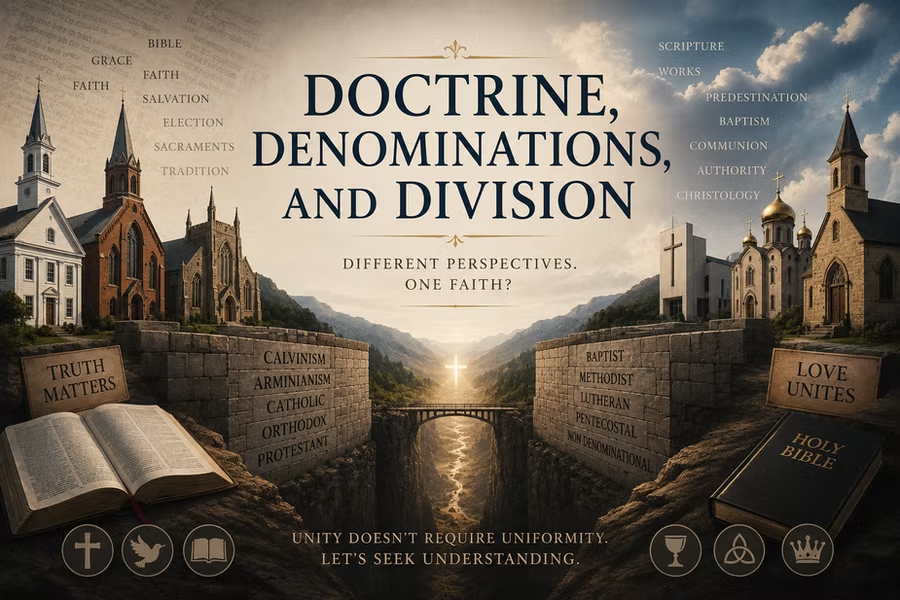
Let the reflection meet the next person you speak with. May wisdom help us listen, unity keep us open to one another, and grace become visible in the care we give.
Wisdom · Unity · Grace