Jesus, Religious Conflict, and the Roman Crucifixion
Chris Cahill · 5 min read · First published 2026-05-19
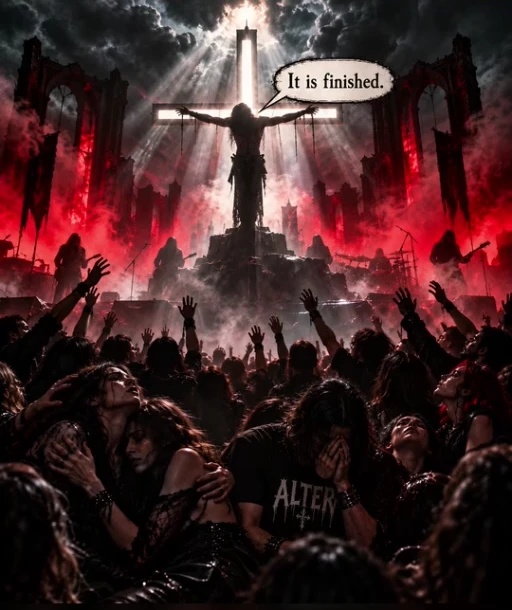
John 19 describes pressure from chief priests, Pilate’s decision, and the crucifixion of Jesus. The account involves religious conflict and Roman authority; it cannot be reduced to a verdict on a whole people or on everyone who holds a firm conviction. The reflection below asks how conviction and care might be examined together.
That is what makes the cross so haunting.
It reveals something deeply uncomfortable about human nature:
religious certainty, when separated from love, can become dangerous.
Not because faith itself is dangerous.
But because human beings can become so convinced they are defending God that they stop recognizing when they are resisting Him.
The Religious World Jesus Entered
Jesus entered a world shaped by Scripture, temple worship, religious law, sacred traditions, purity codes, and messianic expectation.
People were not spiritually indifferent.
They cared deeply about God.
They cared about holiness.
They cared about covenant identity.
They cared about protecting their faith from corruption.
And yet, when God’s love appeared in human form, many religious leaders did not recognize Him.
That should humble all of us.
Because it means religious knowledge alone does not guarantee spiritual perception.
Jesus said:
“You study the Scriptures diligently because you think that in them you have eternal life. These are the very Scriptures that testify about me.” (John 5:39)
They knew the text.
But they missed the heart.
Certainty Can Blind Us to Love
Bring the part of the story that is difficult to say. There can be room for responsibility and repair without making humiliation the price of being heard.
Certainty feels safe.
It reduces anxiety.
It gives people confidence.
It creates clear categories:right and wrong,clean and unclean,faithful and dangerous,us and them.
But certainty can also become blinding when it stops listening.
When people become emotionally attached to being right, disagreement starts feeling like threat.
When people feel threatened, they may find it harder to respond generously.
This is why religious certainty can become dangerous.
Not when it believes deeply.
But when it loses humility.
Jesus Threatened the System Without Attacking God
Jesus did not come to destroy God’s truth.
He came to reveal its deepest meaning.
But He repeatedly challenged the systems built around it.
He healed on the Sabbath.
Ate with sinners.
Touched the unclean.
Elevated women.
Welcomed outsiders.
Confronted hypocrisy.
And declared that mercy mattered more than religious performance.
He said:
“The Sabbath was made for man, not man for the Sabbath.” (Mark 2:27)
That statement was revolutionary.
Jesus was not rejecting holiness.
He was revealing that holiness without love becomes distortion.
Religious Certainty Often Protects Control
One reason religious leaders feared Jesus was that He disrupted control.
Systems survive by creating boundaries.
Rules.
Hierarchies.
Authority structures.
Insider and outsider categories.
Some structure is necessary in any community.
But when protecting the system becomes more important than loving people, religion begins to lose its soul.
Jesus exposed that danger constantly.
“You load people down with burdens they can hardly carry.” (Luke 11:46)
That was not a gentle critique.
It was a direct confrontation of religious systems that burdened people in the name of God.
The Cross Reveals the Danger of Spiritual Pride
The crucifixion is not merely a story about Roman violence.
It is also a story about religious pride.
People became so certain Jesus was a threat that they could not imagine He might be revealing God more clearly than their own systems did.
That is terrifying.
Because pride often feels like conviction from the inside.
Self-righteousness rarely feels like arrogance to the person carrying it.
It feels like faithfulness.
This is why humility is not optional in spiritual life.
James wrote:
“God opposes the proud but shows favor to the humble.” (James 4:6)
Religious pride may be one of the hardest forms of pride to detect because it convinces itself it is obedience.
Jesus Was Condemned by People Who Thought They Were Right
This may be the most sobering part of the story.
The people who called for Jesus’ death did not believe they were doing evil.
They believed they were preserving righteousness.
They believed they were defending God’s honor.
They believed Jesus was dangerous.
This is what happens when certainty becomes disconnected from compassion.
People can begin harming others while believing they are serving God.
That pattern did not end in the first century.
History is filled with religious violence, exclusion, abuse, and cruelty committed by people convinced they were defending truth.
Jesus Centered Love Without Abandoning Truth
Some people assume that criticizing religious certainty means abandoning truth.
But Jesus did not abandon truth.
He embodied it.
John wrote that Jesus came “full of grace and truth.” (John 1:14)
Not grace without truth.
Not truth without grace.
Both.
That balance matters.
Truth without grace becomes harsh.
Grace without truth becomes shallow.
But in Jesus, truth and love were never enemies.
They became one.
Certainty Without Humility Becomes Dangerous
The danger is not having convictions.
The danger is having convictions without humility.
Without self-examination.
Without compassion.
Without willingness to be corrected.
The Apostle Paul wrote:
“For now we see only a reflection as in a mirror.” (1 Corinthians 13:12)
That verse should make every believer humble.
No human being sees perfectly.
No tradition understands fully.
No community is immune from blindness.
That does not mean truth is unknowable.
It means human beings must hold truth with reverence, humility, and love.
Jesus Still Confronts Religious Certainty Today
If Jesus walked into many modern religious spaces, He might still challenge us.
Not because doctrine does not matter.
But because love matters too.
He might ask:Do your beliefs make you more compassionate?
Do your convictions make you more humble?
Do your traditions help wounded people heal?
Do your rules serve love—or protect control?
Do people encounter grace through you?
Or only pressure?
Those questions are uncomfortable.
But they are necessary.
The Cross Still Warns Us
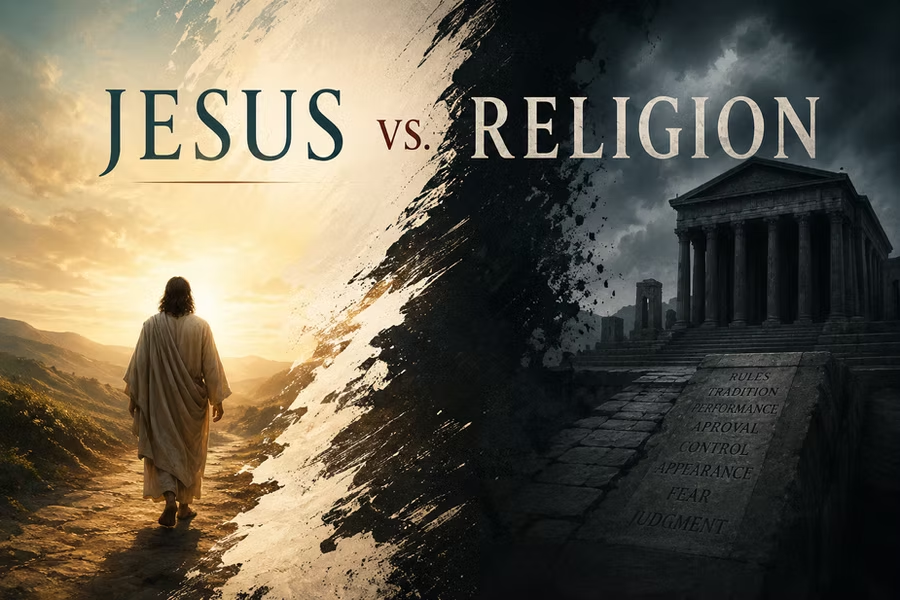
The cross reveals how far human beings can go when fear, power, and certainty join together.
It warns us that religion can become dangerous when it loses the heart of God.
It reminds us that the people most convinced of their own righteousness may still miss Christ standing in front of them.
And it calls us to a better way.
A way of humility.
Mercy.
Truth.
Grace.
Love.
Jesus said:
“By this everyone will know that you are my disciples, if you love one another.” (John 13:35)
Not by certainty alone.
Not by power.
Not by control.
By love.
The Invitation Beyond Religious Pride
Perhaps the most haunting truth of the cross is that Jesus was rejected by people who thought they were defending God.
That should make every religious person tremble with humility.
Not fear.
Humility.
Because if religious certainty could miss Christ then, it can miss Him now.
Maybe the question is not simply:
“Am I right?”
Maybe the deeper question is:
“Am I becoming more like Jesus?”
More humble.
More loving.
More truthful.
More merciful.
More willing to see people the way He sees them.
Because the goal of faith was never certainty without love.
The goal was Christlikeness.
Explore the research, definitions, and limits behind the discussion →
There is room to keep seeking without pretending the hard parts have disappeared. May we offer one another wise companionship, patient grace, and a place to belong while the questions remain.
Wisdom · Unity · Grace