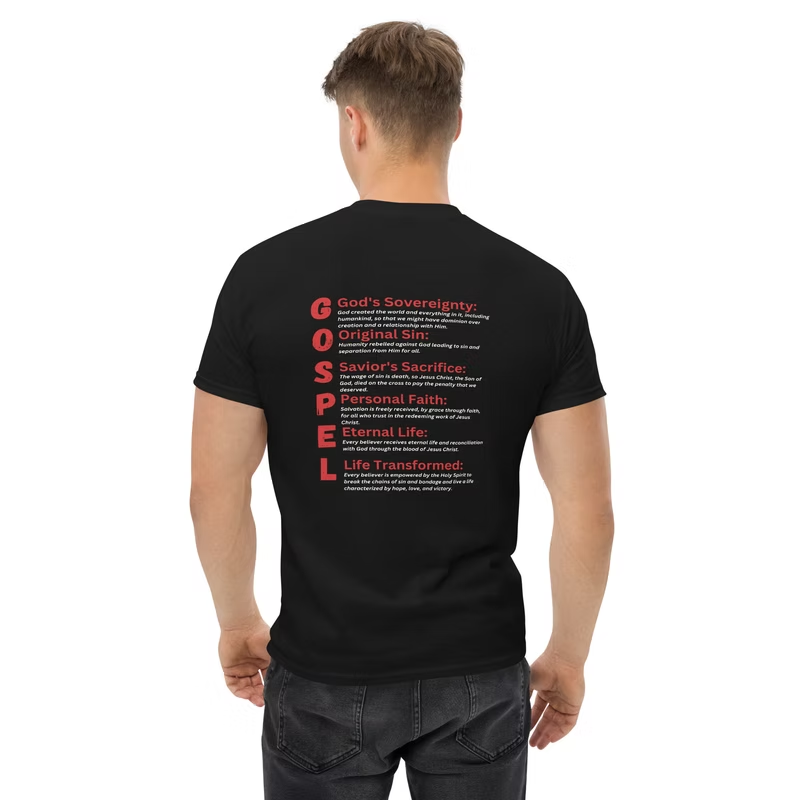
Maybe You Didn’t Lose Faith — Maybe You Lost Trust in Religion
Chris Cahill · 5 min read · First published 2026-05-19
Maybe the problem was never God.
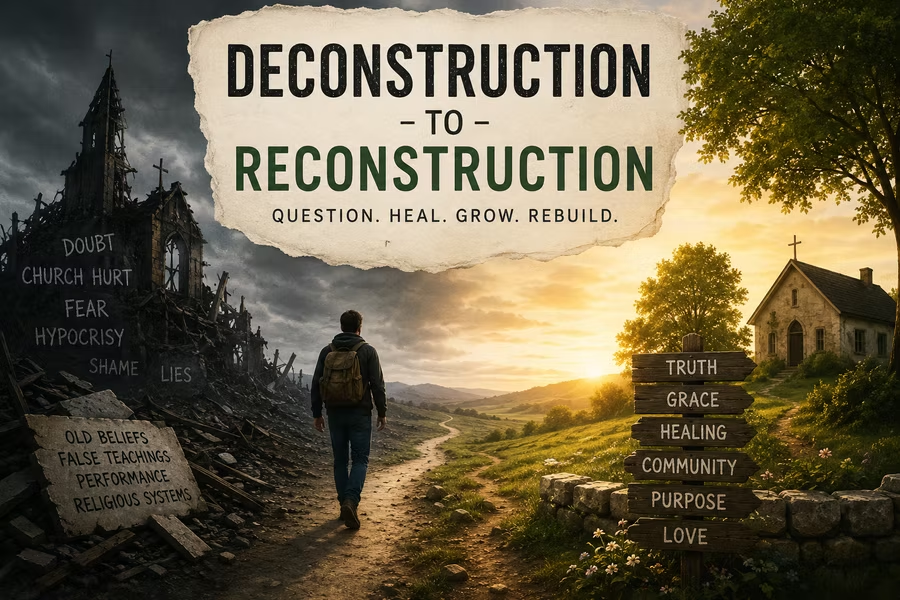
Maybe the problem was what people built around Him.
For many people, walking away from church felt like walking away from faith itself. The two had become so intertwined that separating them seemed impossible. If trust in the institution collapsed, faith often collapsed with it.
But perhaps those are not always the same thing.
Perhaps losing trust in religion is not necessarily the same thing as losing trust in God.
And for many wounded people, that distinction changes everything.
When Faith and Religion Become Fused Together
A person’s longing for faith and belonging deserves tenderness. Let the conversation make room for the story they actually carry, with patience for what remains unfinished.
Family traditions.Church culture.Denominations.Community expectations.Rules.Language.Politics.Social identity.
Over time, religion can become the container through which we experience God.
And containers matter.
Healthy communities can nurture healing, wisdom, belonging, accountability, and spiritual growth. At their best, churches become places where people encounter grace, compassion, truth, and love.
But institutions are still human.
And anything human can become distorted by fear, ego, power, insecurity, tribalism, or control.
That tension has existed since the beginning.
Jesus Himself often confronted religious systems more harshly than He confronted obvious sinners.
“You shut the door of the kingdom of heaven in people’s faces.” (Matthew 23:13)
That is not anti-faith language.
It is a warning about what happens when religion loses its heart.
The Wound Beneath Deconstruction
Many people who say they “lost faith” are actually carrying something deeper:betrayal.
A trusted leader failed.A church manipulated.Questions were shamed.Pain was ignored.Doubt was condemned.Mental health struggles were oversimplified.People were treated like projects instead of human beings.
There is room to bring a weary heart into this conversation. We can listen without making the pain sound smaller, and offer companionship without rushing toward an answer.
That matters because people often assume they are losing God when in reality they are reacting to unresolved pain.
It can be difficult to separate the God you long to trust from the people who claimed to speak for Him.
So when religion wounds someone, faith itself can begin to feel unsafe.
Jesus Never Seemed Threatened by Honest Struggle
One of the most overlooked realities in the Gospels is how patient Jesus was with wounded and questioning people.
Thomas doubted.Peter failed repeatedly.The Samaritan woman carried relational shame.The tax collectors were despised.The religious elite often resisted Him the most.
Yet Jesus consistently moved toward broken people with compassion.
Not once did He say:“Hide your questions.”“Pretend you’re okay.”“Perform spirituality better.”
Instead, He invited honesty.
“Come to me, all you who are weary and burdened.” (Matthew 11:28)
That does not sound like someone demanding performance.
It sounds like someone offering rest.
Religion Can Become About Control
At its healthiest, religion creates meaning, community, moral formation, and spiritual guidance.
At its worst, it can become obsessed with:
image,
certainty,
power,
fear,
tribal loyalty,
and behavior management.
A person’s longing for faith and belonging deserves tenderness. Let the conversation make room for the story they actually carry, with patience for what remains unfinished.
But there is a danger when certainty becomes more important than truth or compassion.
History repeatedly shows that religious systems can become defensive when questioned.
Not because every question is hostile.
But because institutions naturally protect themselves.
And yet Jesus repeatedly disrupted systems that prioritized rules over people.
“The Sabbath was made for man, not man for the Sabbath.” (Mark 2:27)
In other words:systems were meant to serve human flourishing—not crush it.
Maybe You Outgrew Fear-Based Faith
For many people, childhood faith was built primarily on fear:
fear of hell,
fear of punishment,
fear of asking questions,
fear of getting doctrine wrong,
fear of disappointing God,
fear of rejection from community.
Fear can produce compliance.
But fear rarely produces deep transformation.
Scripture repeatedly points toward something deeper:
“Perfect love drives out fear.” (1 John 4:18)
That verse does not say fear disappears instantly.
But it does suggest that mature spirituality moves increasingly toward love rather than terror.
Some people eventually realize they cannot emotionally survive inside systems rooted primarily in shame and fear.
And leaving those systems can feel terrifying.
But perhaps outgrowing fear is not always rebellion.
Perhaps sometimes it is growth.
Losing Trust in Religion Can Create a Spiritual Vacuum
Of course, disillusionment creates its own dangers.
When people leave unhealthy religion, they often lose:
community,
structure,
meaning,
identity,
ritual,
belonging,
and spiritual language.
That kind of loss can feel deeply disorienting.
You may still long for friendship, purpose, and a place to belong after leaving a congregation. Those needs deserve attention alongside your questions about faith.
This is why some people leave toxic religion only to drift into cynicism, nihilism, or endless outrage.
The soul still longs for transcendence.
It still longs for meaning.
Ecclesiastes says:
“He has also set eternity in the human heart.” (Ecclesiastes 3:11)
That longing rarely disappears completely.
Maybe Faith Was Never Supposed to Be About Pretending
One of the strangest things about reconstructing faith is realizing that honesty may actually bring us closer to God than performance ever did.
Maybe God is not shocked by our grief.Our doubts.Our confusion.Our anger.Our questions.
The Psalms themselves are filled with emotional honesty:“How long, Lord?” (Psalm 13:1)
That is Scripture.
Not polished certainty.Not sanitized spirituality.
Honest humanity reaching toward God.
Perhaps real faith was never about pretending to have everything figured out.
Perhaps it was always about learning to seek truth, love, grace, and wisdom honestly.
What If Christ Is Still Worth Following?
For many people, religion and Jesus became indistinguishable.
But the more carefully some people read the Gospels, the more they begin noticing something surprising:Jesus often stood against the very kinds of religious dysfunction that drive people away today.
He confronted hypocrisy.Defended outsiders.Valued mercy over appearances.Touched the untouchable.Welcomed doubters.And consistently centered love.
“By this everyone will know that you are my disciples, if you love one another.” (John 13:35)
Not fear one another.Not shame one another.Not dominate one another.
Love.
Always love.
Maybe This Is Not the End of Faith
If religion wounded you, your pain is real.
If you are questioning, you are not alone.
If you feel spiritually exhausted, confused, or disconnected, many others quietly feel the same way.
But perhaps losing trust in flawed human systems is not automatically the same thing as losing God.
Maybe faith itself still has deeper roots beneath the disappointment.
Maybe Christ is still there beneath the noise, waiting beyond the performance, beyond the fear, beyond the tribalism.
And maybe the invitation was never:“Pretend harder.”
Maybe the invitation was always:“Come and see.”
Explore the research, definitions, and limits behind the discussion →
Read a little further
There is room to keep seeking without pretending the hard parts have disappeared. May we offer one another wise companionship, patient grace, and a place to belong while the questions remain.
Wisdom · Unity · Grace