Philosophy or Theology: More Questions or Answers?
Chris Cahill · 3 min read · First published 2024-04-25
Some questions bring us closer to one another before they bring us an answer. Here, philosophy and theology offer ways of continuing the search with an open heart.
A place to begin
I have developed a deep affection for philosophy and firmly believe in its profound influence on shaping human thought and understanding across the ages. I find myself drawn to Plato's wisdom, yet it was Socrates who aptly remarked, "I cannot teach anybody anything. I can only make them think." While I do not claim to possess the ability to compel others to think, I am convinced that philosophy offers a valuable framework for exploring New Testament Theology along with some of life's most profound questions.
As a Christian, I also recognize the invaluable contribution of philosophical inquiry to our understanding of the Gospel message in the New Testament. Without the foundational insights provided by ancient thinkers, our collective comprehension would lack the depth needed to fully grasp the profound truths encapsulated within the teachings of Jesus Christ and His apostles. Concepts like ethics, metaphysics, and epistemology, examined by philosophers throughout history, have equipped us with the language and cognitive tools to engage meaningfully with the Christian faith.
However, amidst our appreciation for philosophy, it is crucial to heed the biblical warnings regarding the perils of excessive speculation. Colossians 2:8 warns against being "taken captive through philosophy and empty deceit, according to human tradition, according to the elemental spirits of the world, and not according to Christ" (ESV). This admonition underscores the importance of remaining anchored in the truth of Christ, rather than being led astray solely by human wisdom.
Moreover, the Bible warns against engaging in fruitless arguments and debates over philosophical matters. 1 Timothy 6:20 advises, "…avoid the irreverent babble and contradictions of what is falsely called 'knowledge'" (ESV). Instead of getting entangled in endless disputes, Christians are encouraged to focus on proclaiming the Gospel message and living lives that reflect the love and grace of Christ. In fact, as decent human beings, Christian or otherwise, we should all see respect and understanding over vain arguments.
Reading with care
We must also recognize the limitations of our own perspectives and the tendency towards confirmation bias – the inclination to seek out information that confirms our preexisting beliefs.
First Corinthians 13:12 describes present knowledge as partial. Consider whether that recognition could support a more careful hearing of another person’s account. Examining a view does not require accepting it; disagreement can remain specific and respectful.
Christians confess Jesus as the way, the truth, and the life (John 14:6), while acknowledging the limits of human understanding. Paul’s image of seeing dimly in 1 Corinthians 13:12 offers one biblical way to speak about those limits. We can approach another person with humility without treating our own reading as complete.
Carrying this into life
Ultimately, as we navigate the complexities of philosophical thought and engage with diverse perspectives, let us do so, as always, with humility, compassion, and a commitment to understanding. Instead of engaging in fruitless arguments, let us extend goodwill and seek to accept the richness of diverse viewpoints and each other. This includes embracing philosophy while, at least for me, remaining anchored in the truth of Christ; in this way, we can foster meaningful dialogue and pursue a deeper understanding of each other and of God and His creation.
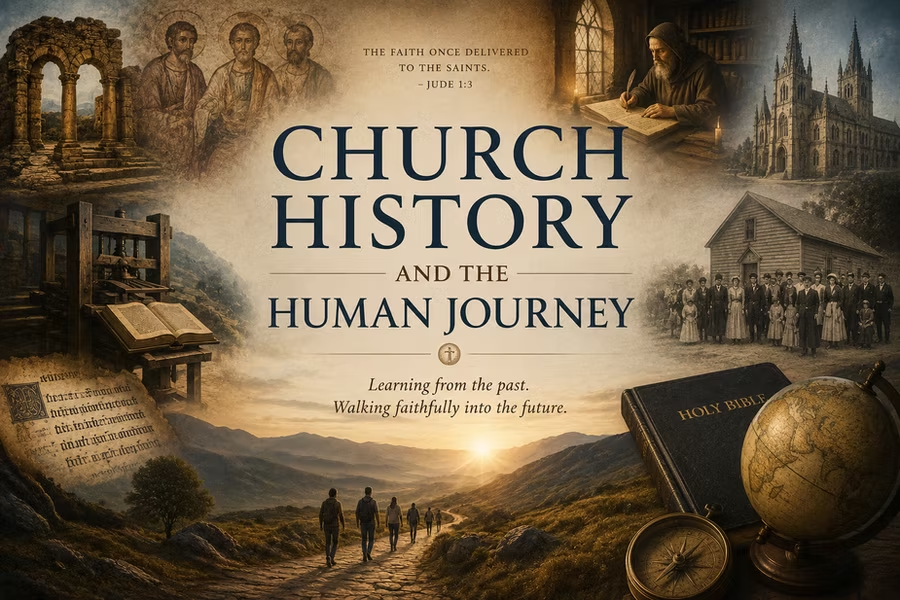
Explore the research, definitions, and limits behind the discussion →
Read a little further
Let the reflection meet the next person you speak with. May wisdom help us listen, unity keep us open to one another, and grace become visible in the care we give.
Wisdom · Unity · Grace