The Difference Between Jesus and Religion
Chris Cahill · 4 min read · First published 2026-05-19
Religion can be beautiful.
It can create community.
Preserve wisdom.
Protect tradition.
Inspire compassion.
Guide people toward meaning and moral responsibility.
But religion can also become rigid.
Controlling.
Fear-driven.
Performative.
And throughout history, many people have quietly wrestled with the uncomfortable question:
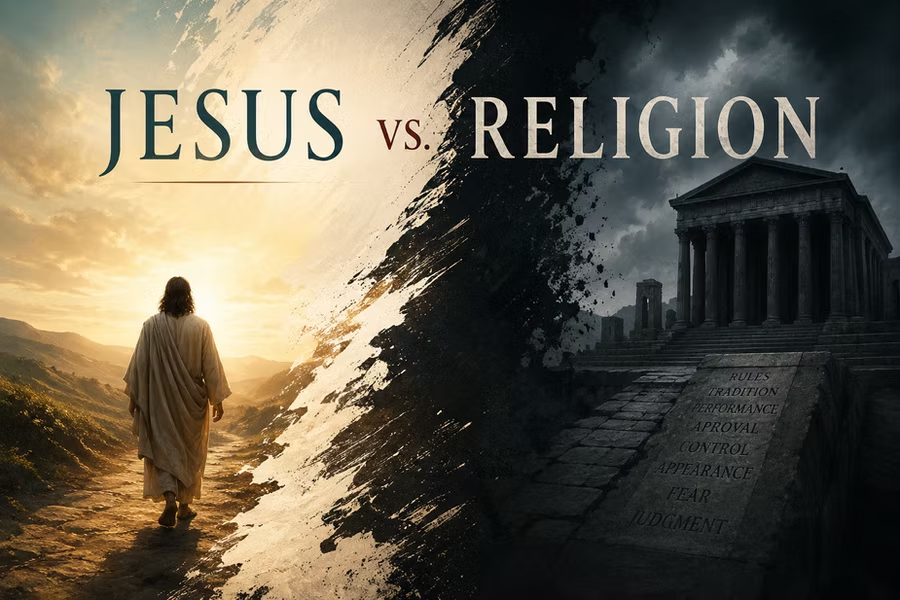
What if Jesus and religion are not always the same thing?
Not because religion is automatically evil.
But because human systems can sometimes drift far from the heart of the One they claim to represent.
This tension sits at the center of the Gospel story itself.
Because Jesus consistently challenged religious systems while simultaneously revealing the heart of God.
Jesus Came Into a Deeply Religious World
Jesus was not born into a spiritually empty culture.
The world He entered was full of:
sacred texts,
religious leaders,
rituals,
purity laws,
temple systems,
traditions,
and moral structures.
People cared deeply about God.
But somewhere along the way, many systems became more focused on:
control,
appearances,
hierarchy,
and rule enforcement
than compassion and transformation.
And Jesus confronted that repeatedly.
“These people honor me with their lips, but their hearts are far from me.” (Matthew 15:8)
That warning still matters today.
Religion Often Focuses on External Performance
One of the consistent themes in the teachings of Jesus is the difference between outward appearance and inward transformation.
Religion often emphasizes:
behavior,
image,
conformity,
ritual,
and external correctness.
None of those things are automatically bad.
But when external performance becomes more important than inner transformation, spirituality becomes hollow.
A person’s longing for faith and belonging deserves tenderness. Let the conversation make room for the story they actually carry, with patience for what remains unfinished.
anxiety,
perfectionism,
shame,
emotional suppression,
and identity fragmentation.
People begin pretending instead of healing.
Jesus repeatedly challenged this dynamic.
“You clean the outside of the cup and dish, but inside they are full…” (Matthew 23:25)
Jesus cared deeply about the inner life.
Jesus Prioritized People Over Systems
Religious systems often protect structure first.
Jesus consistently protected people first.
He healed on the Sabbath.
Touched lepers.
Welcomed sinners.
Defended women.
Ate with outsiders.
Spoke with Samaritans.
Forgave failures.
Again and again, Jesus disrupted systems that valued rules more than human beings.
“The Sabbath was made for man, not man for the Sabbath.” (Mark 2:27)
That statement was revolutionary.
Jesus was not abolishing spiritual wisdom.
He was restoring its purpose:love.
Religion Often Uses Fear. Jesus Repeatedly Offered Peace.
Fear can control behavior quickly.
Fear of punishment.
Fear of rejection.
Fear of not being “good enough.”
Fear of losing belonging.
Some religious systems rely heavily on fear because fearful people are easier to control.
But Jesus consistently moved people toward peace instead of terror.
“Do not be afraid.”
That phrase appears constantly throughout Scripture.
Jesus said:
“Come to me, all you who are weary and burdened, and I will give you rest.” (Matthew 11:28)
Rest.
Not chronic anxiety.
Not emotional exhaustion.
Rest.
Jesus Invited Relationship, Not Mere Compliance
Religion often asks:“What rules must I follow?”
Jesus often asked:“Where is your heart?”
This difference matters psychologically and spiritually.
External compliance can exist without love.
Without healing.
Without transformation.
But relationship changes people from the inside out.
Jesus described spiritual life relationally:
“I no longer call you servants… Instead, I have called you friends.” (John 15:15)
That language is intimate.
Personal.
Relational.
Not merely institutional.
Religious Systems Often Resist Change
Human systems naturally protect themselves.
A person’s longing for faith and belonging deserves tenderness. Let the conversation make room for the story they actually carry, with patience for what remains unfinished.
This is why new ideas or disruptions can feel threatening.
Jesus threatened religious systems not because He lacked truth—but because He exposed hypocrisy and challenged unhealthy power structures.
He questioned:
performative holiness,
legalism,
spiritual pride,
exploitation,
and systems burdening vulnerable people.
“You load people down with burdens they can hardly carry.” (Luke 11:46)
Jesus confronted systems that crushed people in God’s name.
Jesus Was Drawn to the Marginalized
One of the most radical things about Jesus was who He consistently moved toward.
The rejected.
The ashamed.
The doubters.
The poor.
The outsiders.
The sinners.
The socially unwanted.
Religious systems often categorized people by worthiness.
Jesus restored dignity to people society pushed aside.
Psychologically, this matters deeply because shame isolates human beings emotionally.
Love restores connection.
Again and again, Jesus communicated:“You are not beyond grace.”
Religion Can Become About Image
One of the great temptations of organized religion is image management.
Appearing holy.
Appearing righteous.
Appearing spiritually mature.
But image-focused spirituality often creates hidden emotional fragmentation.
People learn:
what emotions are acceptable,
what struggles should remain hidden,
and how to perform spirituality publicly.
Jesus repeatedly warned against this.
“When you pray, do not be like the hypocrites…” (Matthew 6:5)
The issue was not prayer.
It was performance.
God seemed less interested in appearances than authenticity.
Jesus Balanced Truth and Grace Together
Some people wrongly assume emphasizing grace means abandoning truth.
Jesus did neither.
John described Christ as:
“full of grace and truth.” (John 1:14)
That balance matters.
Truth without grace becomes harsh.
Grace without truth becomes shallow.
Religion often swings toward one extreme or the other:
rigid legalism,
or vague spirituality without transformation.
Jesus held both together beautifully.
Compassion without compromise.
Truth without cruelty.
Why So Many People Still Love Jesus but Struggle With Religion
Many people today feel spiritually drawn toward Jesus while simultaneously feeling wounded by religious institutions.
Why?
Because they sense a difference between:
Christ’s compassion,
and human control.
Between:
grace,
and shame.
Between:
humility,
and spiritual arrogance.
This does not mean every church is unhealthy.
Nor does it mean all religion is corrupt.
But it does explain why many people continue longing for Jesus while wrestling deeply with organized religion.
Jesus Focused on Transformation, Not Mere Rule-Keeping
Religion often asks:“How do we maintain order?”
Jesus asked:“How do human beings become whole?”
That distinction changes everything.
Jesus consistently moved beneath behavior into the deeper realities of:
the heart,
motives,
wounds,
love,
forgiveness,
pride,
fear,
and transformation.
Because external behavior modification alone does not heal the soul.
Love does.
Grace does.
Truth joined with compassion does.
The Invitation Beyond Empty Religion
Jesus did not come merely to create better rule-followers.
He came to restore human beings.
To reconnect people with:
God,
themselves,
others,
truth,
grace,
and love.
That is why He remained so dangerous to rigid systems.
Because love threatens control.
Grace threatens superiority.
Mercy threatens pride.
And authentic transformation threatens every system built more around performance than compassion.
Perhaps the difference between Jesus and religion is not that one cares about truth and the other does not.
Perhaps the deeper difference is this:
religion often asks people to perform worthiness.
Jesus begins by offering love before people think they deserve it.
And maybe that kind of grace is still the most radical thing in the world.
Explore the research, definitions, and limits behind the discussion →
There is room to keep seeking without pretending the hard parts have disappeared. May we offer one another wise companionship, patient grace, and a place to belong while the questions remain.
Wisdom · Unity · Grace