The Power of Hope: Transforming Lives and Shaping History
Chris Cahill · 2 min read · First published 2024-04-29
Hope can keep a person reaching toward a life beyond the present difficulty. This reflection considers how that hope may become care for the world around us.
A place to begin
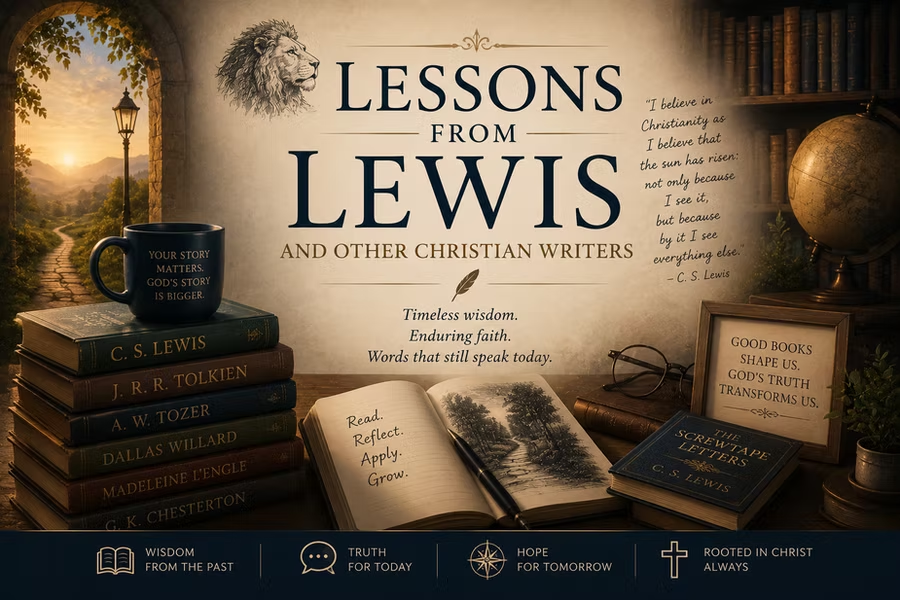
In the halls of human history, few tenants shine as brightly as the indomitable spirit of hope—a hope rooted in the eternal promises of God and the conviction of a better future. C.S. Lewis captured this sentiment succinctly when he declared, "If you read history, you will find that the Christians who did most for the present world were just those who thought most of the next." Indeed, throughout the annals of church history and the pages of Scripture, we see the transformative power of hope at work, inspiring courage, resilience, and unwavering commitment to the cause of Christ.
Consider the early Christians, who, in the face of fierce persecution and unimaginable suffering, clung tenaciously to the hope of the resurrection and the promise of eternal life. Men and women like Stephen, the first Christian martyr, who, in the midst of his execution, beheld a vision of heaven and proclaimed, "Lord Jesus, receive my spirit" (Acts 7:59, NIV). His steadfast faith in the face of death stands as a testament to the power of hope to overcome even the darkest of circumstances.
The apostle Paul, likewise, exemplified this unshakeable hope, enduring beatings, imprisonments, and eventual martyrdom for the sake of the Gospel. In his letter to the Philippians, he writes, "For to me, to live is Christ and to die is gain" (Philippians 1:21, NIV). Here, Paul articulates a perspective shaped by the hope of eternity—a hope that transcends the temporal trials of this present life.
Reading with care
Throughout church history, countless men and women have followed in the footsteps of these early martyrs, boldly proclaiming their faith in the face of persecution and martyrdom. From the martyrs of the Roman Colosseum to the reformers of the Protestant Reformation, their unwavering hope in the promises of God propelled them to acts of extraordinary courage and sacrifice.
But one might argue, do we need to face martyrdom to be considered strong Christians? Absolutely not. While martyrdom represents the pinnacle of faithfulness, the power of hope extends far beyond the realm of physical persecution. It encompasses the everyday struggles and challenges we encounter, reminding us that, as Romans 8:31 assures us, "If God is for us, who can be against us?" (NIV).
Carrying this into life
Read slowly, with room for another person to hear these words differently. May what we learn draw us toward a more patient conversation and a life more attentive to love.
Let the reflection meet the next person you speak with. May wisdom help us listen, unity keep us open to one another, and grace become visible in the care we give.
Wisdom · Unity · Grace