When Church Feels Unsafe
Chris Cahill · 4 min read · First published 2026-05-19
Church is supposed to feel like refuge.
A place of:
grace,
healing,
truth,
belonging,
and spiritual safety.
But for many people, church becomes associated not with peace—but with fear.
Fear of judgment.
Fear of rejection.
Fear of shame.
Fear of being controlled, misunderstood, silenced, or emotionally harmed.
And perhaps one of the most painful spiritual experiences is when the place meant to reflect God’s love becomes the place where someone feels emotionally unsafe.
Because wounds connected to faith often cut deeper than ordinary disappointment.
They touch identity.
Belonging.
Trust.
And the soul itself.
Emotional Safety Matters Spiritually
If these words touch something you have lived through, take your time. Your story deserves a patient hearing, with care for your safety and room to seek trustworthy support.
People flourish where they feel:
seen,
respected,
heard,
valued,
and emotionally secure.
When someone feels unsafe, they may respond with:
anxiety,
hypervigilance,
emotional shutdown,
people-pleasing,
or fear-based compliance.
This applies spiritually too.
People struggle to grow authentically where fear dominates.
Because transformation requires honesty.
And honesty rarely survives environments where vulnerability feels dangerous.
Church Hurt Often Feels Personal and Existential
Pain inside faith communities feels uniquely intense because spirituality connects deeply to meaning and identity.
When trusted spiritual leaders or communities wound people, it can shake:
faith,
self-worth,
worldview,
and trust in God Himself.
If these words touch something you have lived through, take your time. Your story deserves a patient hearing, with care for your safety and room to seek trustworthy support.
This is why church hurt often feels larger than ordinary conflict.
The wound reaches into the soul’s search for belonging and safety.
Fear-Based Religion Creates Emotional Exhaustion
Some churches unintentionally create cultures driven primarily by:
fear,
shame,
perfectionism,
control,
or constant pressure.
People begin feeling:
never good enough,
constantly monitored,
spiritually anxious,
emotionally trapped,
or terrified of failure.
Fear may create outward conformity temporarily.
But it rarely creates deep emotional healing or authentic transformation.
“Perfect love drives out fear.” (1 John 4:18)
That verse raises an important question:if spirituality consistently produces fear and exhaustion, something may be deeply misaligned.
Questions Should Not Feel Dangerous
Healthy environments allow room for:
curiosity,
doubt,
wrestling,
growth,
and honest questions.
Yet some churches treat questions as rebellion.
People may feel shamed for:
uncertainty,
intellectual curiosity,
emotional struggle,
or theological wrestling.
But throughout Scripture, people openly questioned God:
Job,
David,
Jeremiah,
Thomas,
even Jesus Himself on the cross.
Questions are not the enemy of faith.
Dishonesty is.
Fear-based certainty often creates fragile spirituality unable to withstand complexity or suffering.
Spiritual Abuse Often Hides Behind Authority
Spiritual abuse occurs when religious authority is used to:
manipulate,
control,
shame,
silence,
intimidate,
or exploit people emotionally or spiritually.
This can look like:
fear-based preaching,
authoritarian leadership,
public humiliation,
conditional belonging,
spiritual gaslighting,
or using Scripture to maintain control.
Jesus consistently warned against religious leaders who burdened people rather than helping them heal.
“You load people down with burdens they can hardly carry.” (Luke 11:46)
Healthy spiritual leadership should move people toward freedom and maturity—not emotional captivity.
When religious harm stays with us
Trauma is not merely remembered intellectually.
It is carried physically and emotionally too.
People harmed spiritually may experience:
anxiety entering churches,
panic during worship,
emotional numbness,
distrust,
guilt,
or hypervigilance around religious conversations.
If these words touch something you have lived through, take your time. Your story deserves a patient hearing, with care for your safety and room to seek trustworthy support.
This does not mean someone is weak or “faithless.”
It means the body remembers pain.
Healing often requires patience, safety, honesty, and compassion.
Jesus Often Felt Safer Than Religious Systems
One striking pattern in the Gospels is that wounded people often felt safe around Jesus.
The ashamed approached Him.
The broken approached Him.
The doubting approached Him.
The outcasts approached Him.
Yet many religious leaders felt threatened by Him.
That contrast matters deeply.
Because Jesus consistently moved toward people with:
compassion,
honesty,
gentleness,
and grace.
“Come to me, all you who are weary and burdened…” (Matthew 11:28)
Not:perform harder.
Fear more.
Pretend better.
Rest.
Leaving an Unsafe Church Can Feel Like Grief
Many people feel guilty for leaving harmful spiritual environments.
But leaving often involves profound grief:
loss of community,
loss of identity,
loss of belonging,
loss of certainty,
and sometimes loss of faith itself.
People may feel:
lonely,
disoriented,
angry,
spiritually homeless,
or emotionally shattered.
Grief is natural when something deeply meaningful becomes painful.
Healing takes time.
And sometimes stepping away temporarily is not rebellion.
It is survival.
Not Every Church Is the Same
It is important to say clearly:not all churches are harmful.
Many communities genuinely reflect:
compassion,
humility,
healing,
accountability,
and authentic love.
Healthy churches create room for:
honesty,
emotional safety,
growth,
questions,
and grace.
The existence of unhealthy spiritual systems does not erase the possibility of healthy spiritual community.
But discernment matters deeply.
Healing Often Begins With Separating God From Human Failure
One of the hardest parts of church hurt is distinguishing:God,from the people who misrepresented Him.
When spiritual leaders wound others, people often unconsciously associate:
manipulation with God,
shame with God,
fear with God,
rejection with God.
But Jesus consistently revealed something different:compassion,truth,mercy,and love.
Healing often begins by rediscovering the difference between Christ and the failures of human systems.
God Is Not Threatened by Honest Pain
Many wounded believers fear bringing anger or grief to God honestly.
Yet Scripture is filled with lament.
David cried openly.
Job questioned openly.
The prophets wrestled openly.
God does not seem frightened by human honesty.
Perhaps authentic faith begins not with pretending everything is fine—but with bringing pain truthfully into the light.
The Invitation Beyond Fear
Perhaps church should never have been about controlling people through fear.
Perhaps it was always meant to point people toward:
love,
healing,
truth,
humility,
belonging,
and grace.
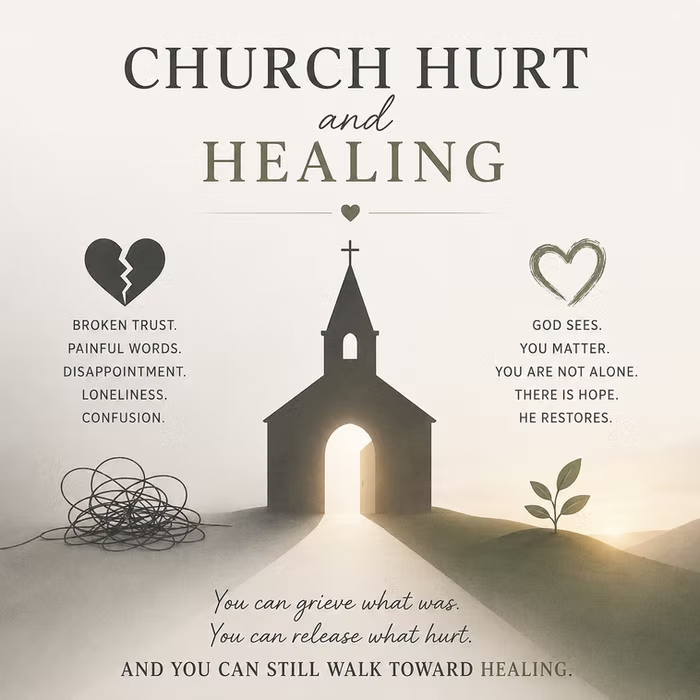
If church feels unsafe, your pain matters.
Your wounds matter.
Your questions matter.
And healing is possible.
Not through pretending the hurt never happened.
But through honesty, compassion, wisdom, and rediscovering the heart of Christ beyond the failures of human systems.
Because Jesus never asked wounded people to fake peace.
He invited them into healing.
Explore the research, definitions, and limits behind the discussion →
Read a little further
There is room to keep seeking without pretending the hard parts have disappeared. May we offer one another wise companionship, patient grace, and a place to belong while the questions remain.
Wisdom · Unity · Grace