Why did Jesus have to die on the cross? (Atonement Theories)
Chris Cahill · 4 min read · First published 2024-05-01
Christians turn to the cross with shared devotion and different explanations of atonement. Understanding those explanations can help us listen across traditions.
A place to begin
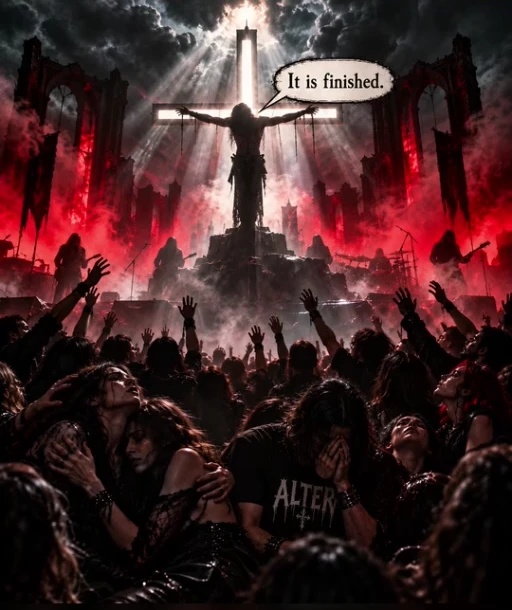
The crucifixion of Jesus Christ is a foundational belief of the Christian faith. It is believed that Jesus had to die on the cross in order to save humanity from sin and offer redemption. The question, "Why did Jesus have to die on the cross?" has been the subject of much theological debate and exploration throughout the history of Christianity. In this reflection, we will look at the various atonement theories that seek to explain the significance of Jesus' death on the cross.
There are four primary atonement theories that have been developed over the centuries to explain the necessity of Jesus' sacrifice: Christus Victor, satisfaction theory, moral exemplar, and penal substitution.
- Christus Victor:
This theory, also known as the "classic model" of atonement, emphasizes the victory of Christ over sin, death, and the powers of evil. Jesus' death and resurrection are seen as a cosmic battle against the forces of darkness. This theory is based on verses such as Colossians 2:15, which states, "Having disarmed the powers and authorities, he made a public spectacle of them, triumphing over them by the cross." Key figures who support this theory include early church fathers such as Irenaeus and Athanasius. The Eastern Orthodox Church also upholds this view.
- Satisfaction Theory:
This theory, developed by Anselm of Canterbury in the 11th century, posits that Jesus' death on the cross was necessary to satisfy the justice of God and restore the honor that was offended by human sin. Anselm's view is based on verses such as Romans 3:25-26, which states, "God presented Christ as a sacrifice of atonement, through the shedding of his blood—to be received by faith." This theory has been influential in Western Christianity, particularly in the Roman Catholic tradition.
- Moral Exemplar:
This theory, attributed to Peter Abelard in the 12th century, focuses on Jesus' death as a moral example of selfless love and obedience to God. According to this view, Jesus' sacrifice demonstrates the extent of God's love for humanity and serves as a model for Christian living. Verses such as 1 Peter 2:21 support this perspective: "To this you were called, because Christ suffered for you, leaving you an example, that you should follow in his steps." This theory has been embraced by some liberal Protestant theologians.
- Penal Substitution:
Reading with care
This theory, also known as the "satisfaction model," proposes that Jesus' death was a substitutionary sacrifice in which he bore the penalty for human sin on behalf of humanity. According to this view, God's justice demanded a payment for sin, and Jesus willingly offered himself as a sacrifice to satisfy that debt. Verses such as Isaiah 53:5-6 align with this theory: "But he was pierced for our transgressions, he was crushed for our iniquities; the punishment that brought us peace was on him, and by his wounds we are healed." This theory is predominant in evangelical and Reformed traditions.
The primary position in Western Christianity is penal substitutionary atonement because it emphasizes the sacrificial nature of Jesus' death as a necessary payment for sin. The Bible verse Hebrews 9:22 asserts, "Indeed, under the law almost everything is purified with blood, and without the shedding of blood there is no forgiveness of sins." This verse underscores the importance of blood sacrifice in atoning for sin.
However, critics of penal substitutionary atonement often portray it as a form of divine child abuse, suggesting that it presents God as a violent and wrathful deity who demands blood sacrifice to appease his anger. This characterization has been labeled as a "strawman tactic" by proponents of penal substitution, as it oversimplifies and misrepresents the theological nuances of this theory.
It is important to recognize that the atonement theories are not mutually exclusive, but rather complement each other in providing a comprehensive understanding of the significance of Jesus' death on the cross. Each theory sheds light on different aspects of the atonement, whether it be victory over evil, satisfaction of divine justice, moral example, or substitutionary sacrifice.
In the end, the central message of the crucifixion is that Jesus died for our sins in order to reconcile humanity with God and offer redemption and salvation. Regardless of the specific atonement theory one adheres to, the focus should ultimately be on putting faith in Christ and living a life that reflects his love and sacrifice.
Carrying this into life
Which passages support each account of atonement, and where do the interpretations differ? Consider discussing those differences with patience while attending to the person across the table.

As we keep reading, may wisdom help us distinguish the passage from our interpretation, unity keep the conversation open, and grace shape the way we treat one another.
Wisdom · Unity · Grace