Why Humans Create Stories
Chris Cahill · 4 min read · First published 2026-05-19
Human beings are storytelling creatures.
Before science textbooks,before philosophy lectures,before social media,before modern psychology—
there were stories.
Stories told around fires.
Stories painted on cave walls.
Stories passed through generations to explain:
love,
suffering,
courage,
death,
meaning,
identity,
and the mystery of existence itself.
And even now, despite all modern advancement, stories still shape nearly everything about human life.
Movies.
Religion.
Politics.
Family identity.
National identity.
Personal identity.
Because perhaps stories are not merely entertainment.
Perhaps stories are how human beings make sense of reality itself.
Stories Help Humans Understand the World
A person’s longing for faith and belonging deserves tenderness. Let the conversation make room for the story they actually carry, with patience for what remains unfinished.
People instinctively interpret experience through stories:
where they came from,
what happened to them,
who they are,
and where their life is heading.
This is sometimes called narrative identity—the idea that people understand themselves through internal stories about their lives.
Without narrative, human experience feels fragmented and chaotic.
Stories create coherence.
Meaning.
Connection between events.
This is why humans constantly ask:“What does my life mean?”
Stories Carry Emotional Truth
Facts inform.
Stories transform.
Why?
Because stories engage more than logic alone.
They awaken:
imagination,
empathy,
emotion,
memory,
and self-reflection.
Read slowly, with room for another person to hear these words differently. May what we learn draw us toward a more patient conversation and a life more attentive to love.
This is why people often remember stories for decades while forgetting raw information quickly.
Stories reach the heart differently.
The stories communities tell
Across history, every civilization has created stories explaining:
creation,
morality,
suffering,
heroism,
death,
and transcendence.
Why?
Because human beings long for meaning larger than isolated existence.
Stories help people answer existential questions:
Why are we here?
What is good?
What matters?
How should we live?
What happens after death?
Whether religious, philosophical, or cultural, stories shape how societies understand reality itself.
Jesus Frequently Taught Through Stories
One of the most fascinating things about Jesus is how often He taught through parables instead of rigid formulas.
Stories about:
lost sons,
vineyards,
seeds,
shepherds,
weddings,
lamps,
and hidden treasure.
Why?
Because stories bypass defensiveness and invite reflection.
People often resist direct confrontation intellectually.
But stories allow truth to unfold internally.
Jesus understood that transformation usually requires more than information.
It requires imagination and self-awareness too.
Stories Help Humans Process Suffering
There is room to bring a weary heart into this conversation. We can listen without making the pain sound smaller, and offer companionship without rushing toward an answer.
Pain creates confusion:
Why did this happen?
Who am I now?
Does my suffering mean anything?
Healing often involves rebuilding narrative meaning.
Not pretending pain was good.
But discovering purpose, growth, or connection within it somehow.
This is one reason people instinctively tell stories after tragedy.
Stories help organize grief emotionally.
They help human beings survive suffering without drowning in chaos.
Thinking through images and stories
Human consciousness naturally understands through symbols and metaphor.
Even everyday language reflects this:
“carrying burdens,”
“dark seasons,”
“light at the end of the tunnel,”
“broken hearts.”
These are symbolic narratives helping humans express realities deeper than literal description alone.
Religion often speaks symbolically too:
gardens,
wilderness,
light,
water,
fire,
resurrection,
exile,
and homecoming.
Symbols help finite minds approach realities larger than simple literal explanation can fully contain.
Stories Shape Identity More Than Facts Alone
People rarely live according to facts alone.
They live according to the stories they believe about themselves.
For example:
“I am unlovable.”
“I must earn worth.”
“The world is unsafe.”
“People always leave.”
“I am chosen.”
“I matter.”
“My life has purpose.”
Read slowly, with room for another person to hear these words differently. May what we learn draw us toward a more patient conversation and a life more attentive to love.
behavior,
relationships,
emotional health,
and worldview.
This is why destructive stories can wound people profoundly.
And healing stories can transform them.
Religion Offers Humanity a Cosmic Story
Religions do more than provide moral rules.
They provide overarching narratives explaining:
existence,
suffering,
purpose,
morality,
and hope.
Christianity tells a story of:
creation,
separation,
redemption,
restoration,
and love stronger than death.
Whether one fully believes it or not, the emotional power of the Christian story comes partly from how deeply it resonates with universal human longings:
belonging,
forgiveness,
meaning,
hope,
and reconciliation.
Humans Long to Be Part of Something Bigger
Stories connect individual lives to larger meaning.
People want to believe they are part of:
a family story,
a national story,
a spiritual story,
or a meaningful human story.
Without larger narrative, life can feel random and fragmented.
This is one reason nihilism feels emotionally difficult for many people.
The human soul seems wired to seek significance beyond isolated survival.
Stories help people locate themselves within meaning larger than the self.
Stories Create Empathy
One powerful feature of storytelling is empathy.
Stories allow people to emotionally enter another person’s experience.
A person’s longing for faith and belonging deserves tenderness. Let the conversation make room for the story they actually carry, with patience for what remains unfinished.
This matters spiritually too.
Jesus often used stories that challenged simplistic judgment.
The Good Samaritan transformed an outsider into the hero.
The Prodigal Son transformed failure into restoration.
Stories soften tribal thinking because they reveal shared humanity.
Perhaps Reality Itself Is Narrative
Some philosophers and theologians suggest human beings resonate so deeply with stories because reality itself unfolds narratively:
beginnings,
conflict,
longing,
transformation,
redemption,
and hope.
Life itself often feels like unfolding story.
Not static information.
Movement.
Journey.
Becoming.
And perhaps the reason stories feel sacred is because they mirror something true about existence itself.
The Invitation Beyond Meaninglessness
Perhaps humans create stories because the soul longs to connect life to meaning.
To understand suffering.
To preserve love.
To explain beauty.
To carry hope across generations.
Christianity claims humanity itself lives inside a larger story:a story of love, separation, redemption, and restoration.
Others may understand that differently.
But nearly everyone shares the same longing:to believe their life is part of something meaningful.
And maybe stories matter so deeply because human beings were never meant to experience existence as random noise.
Maybe we were meant to search for meaning.
To seek connection.
To become part of something larger than ourselves.
And perhaps every story humanity tells is, in some way, a reflection of that deeper longing for truth, belonging, and transcendence.
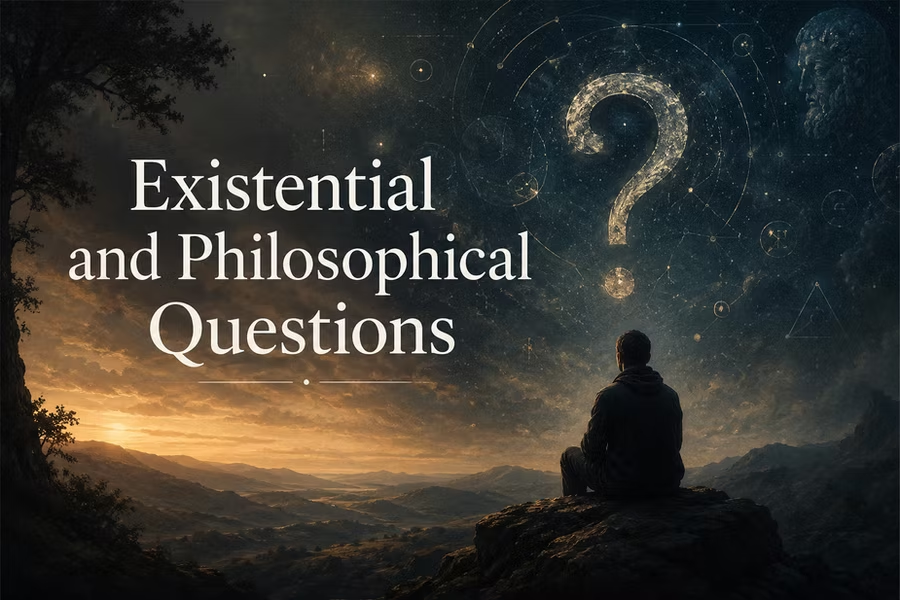
Explore the research, definitions, and limits behind the discussion →
We can keep asking without turning the person across from us into an opponent. May wisdom deepen our attention, grace soften our conversation, and shared curiosity make room for understanding.
Wisdom · Unity · Grace