Why Leaving Church Can Feel Like Grief
Chris Cahill · 4 min read · First published 2026-05-19
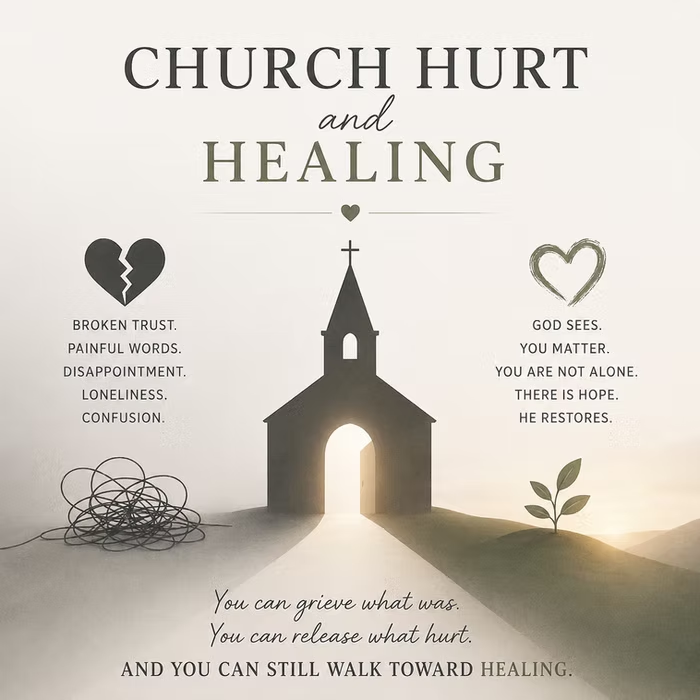
Leaving a church is rarely just leaving a building.
For many people, it feels like losing:
family,
identity,
belonging,
certainty,
community,
routine,
and sometimes even their understanding of God.
That is why leaving church can feel deeply painful emotionally.
Not simply disappointing.
Grieving.
Because church is often woven into:
relationships,
memories,
values,
spiritual experiences,
and personal identity itself.
And when something once associated with safety or meaning becomes painful, confusing, or unsafe, the emotional impact can feel devastating.
Especially when people feel they must walk away from something they once loved.
Grief Is Not Limited to Death
There is room to bring a weary heart into this conversation. We can listen without making the pain sound smaller, and offer companionship without rushing toward an answer.
People grieve:
relationships,
dreams,
identity,
trust,
safety,
certainty,
and community.
Leaving church often involves multiple losses simultaneously.
Friends.
Spiritual routines.
Social support.
Leadership relationships.
Shared beliefs.
A sense of home.
This is why people sometimes feel emotionally disoriented after leaving even unhealthy church environments.
Because grief is complicated.
Church Often Shapes Identity Deeply
For many believers, church becomes central to identity from childhood onward.
People build:
friendships,
worldview,
morality,
purpose,
and belonging
inside faith communities.
There is room to bring a weary heart into this conversation. We can listen without making the pain sound smaller, and offer companionship without rushing toward an answer.
So when someone leaves church, it may feel like:
losing part of themselves,
losing certainty,
or losing connection to meaning itself.
This is especially true when communities teach:“Outside this group, you are spiritually unsafe.”
Leaving Can Trigger Shame and Fear
Many people leaving church carry enormous guilt.
They fear:
disappointing God,
betraying family,
becoming spiritually lost,
or being judged by others.
Some fear eternal consequences simply for stepping away from unhealthy environments.
Fear-based religious systems often intensify this anxiety by equating loyalty to institutions with loyalty to God Himself.
But leaving harmful dynamics is not automatically abandoning faith.
Sometimes it is an attempt to preserve honesty, mental health, and spiritual integrity.
People Often Grieve the Church They Hoped Existed
One painful reality is that people do not merely grieve what church was.
They grieve what they hoped it would be.
A place of:
love,
safety,
healing,
grace,
authenticity,
and belonging.
When reality falls short repeatedly through:
hypocrisy,
control,
abuse,
shame,
politics,
exclusion,
or manipulation,
people often experience profound heartbreak.
Because disappointment hurts most where hope once existed deeply.
When religious pain stays with us
There is room to bring a weary heart into this conversation. We can listen without making the pain sound smaller, and offer companionship without rushing toward an answer.
People leaving harmful churches may experience:
anxiety,
panic,
numbness,
distrust,
guilt,
hypervigilance,
or emotional shutdown around spiritual topics.
This is not weakness.
Past pain may be part of what makes returning difficult; it is worth listening before assigning a cause.
Rebuilding trust after harmful religious experiences may take time. Someone’s fear deserves care without assuming a particular biological explanation.
Loneliness Often Follows Deconstruction
One of the hardest parts of leaving church is loneliness.
People may lose:
friendships,
support systems,
mentorship,
routines,
and social belonging all at once.
There is room to bring a weary heart into this conversation. We can listen without making the pain sound smaller, and offer companionship without rushing toward an answer.
Isolation after losing community can intensify:
depression,
anxiety,
grief,
and existential confusion.
This is why many people stay in unhealthy religious environments longer than they should.
The fear of losing belonging feels overwhelming.
Jesus Also Experienced Rejection and Betrayal
Christianity presents a Savior deeply familiar with grief and abandonment.
Jesus experienced:
betrayal,
misunderstanding,
rejection,
loneliness,
and suffering.
“He was despised and rejected by mankind.” (Isaiah 53:3)
That matters emotionally.
Because it means Christianity does not present a God emotionally distant from human pain.
Jesus understood relational grief personally.
Leaving Church Does Not Automatically Mean Leaving God
Many people fear that stepping away from institutional church means abandoning God entirely.
But those are not always the same thing.
Some people leave because they no longer believe anything spiritually.
Others leave because they are desperately trying to rediscover authentic faith beyond unhealthy systems.
Some leave to survive emotionally.
Some leave to heal.
Some leave because they still long for God but can no longer tolerate environments that feel manipulative or unsafe.
These journeys are often far more complex than outsiders realize.
Grief Often Includes Anger
People grieving church hurt may feel:
anger,
resentment,
sadness,
confusion,
numbness,
or betrayal.
This is normal.
Bring the part of the story that is difficult to say. There can be room for responsibility and repair without making humiliation the price of being heard.
The Psalms themselves contain deep emotional honesty:lament,rage,confusion,and heartbreak.
Scripture does not demand fake emotional positivity.
It makes room for lament.
Healing Usually Happens Slowly
Spiritual healing rarely occurs instantly.
People often need:
safety,
honest conversation,
supportive relationships,
boundaries,
therapy,
reflection,
and time.
Some eventually return to healthy spiritual community.
Some reconstruct faith differently.
Some spend years rebuilding trust slowly.
Healing is not linear.
And forcing people to “just move on” often deepens wounds rather than resolving them.
Healthy Faith Makes Space for Grief
Healthy spirituality does not shame people for hurting.
It makes room for:
lament,
honesty,
questions,
and healing.
“Blessed are those who mourn, for they will be comforted.” (Matthew 5:4)
Jesus never mocked grief.
He moved toward grieving people compassionately.
That matters deeply for wounded believers today.
The Invitation Beyond Loss
Perhaps leaving church feels like grief because human beings were made for:
belonging,
meaning,
connection,
and spiritual home.
When those things fracture, the soul aches deeply.
But grief is not proof that healing is impossible.
It is proof something meaningful mattered.
And maybe the goal is not pretending the hurt never happened.
Maybe the goal is slowly rediscovering:
truth without fear,
faith without control,
community without manipulation,
and spirituality rooted once again in love.
Because even after disappointment, heartbreak, and loss—
many people still quietly long for God.
And perhaps grace is patient enough to meet them there.
Explore the research, definitions, and limits behind the discussion →
Read a little further
Let the reflection meet the next person you speak with. May wisdom help us listen, unity keep us open to one another, and grace become visible in the care we give.
Wisdom · Unity · Grace