Why Religious Leaders Feared Jesus
Chris Cahill · 4 min read · First published 2026-05-19
Jesus healed the sick.
Fed the hungry.
Comforted the grieving.
Forgave failures.
Spoke about love, mercy, humility, and peace.
So why did religious leaders fear Him so deeply?
Why would people devoted to God feel threatened by someone who embodied compassion so powerfully?
Because Jesus did not merely challenge behavior.
He challenged systems.
Power.
Control.
Ego.
And perhaps most dangerously of all:
He exposed the difference between authentic spirituality and performative religion.
Religious Leaders Did Not See Themselves as Villains
One of the most uncomfortable truths in the Gospel story is this:
the religious leaders who opposed Jesus believed they were defending truth.
Protecting holiness.
Protecting tradition.
Protecting God.
That matters deeply.
Because self-righteousness rarely feels like arrogance from the inside.
It feels like certainty.
Conviction.
Faithfulness.
This is why spiritual pride can become so dangerous psychologically and spiritually.
People can sincerely believe they are serving God while resisting the very heart of God standing in front of them.
Jesus Threatened Religious Authority
Religious systems often depend on structure and hierarchy.
Who interprets truth.
Who holds authority.
Who belongs.
Who is spiritually acceptable.
Jesus disrupted those structures constantly.
He taught without institutional permission.
He forgave sins publicly.
He welcomed outsiders directly.
He spoke with authority that bypassed religious gatekeeping.
The crowds noticed immediately:
“He taught as one who had authority.” (Matthew 7:29)
That threatened leaders whose influence depended on controlling spiritual access.
Fear of Losing Control Is Deeply Human
There is room to bring a weary heart into this conversation. We can listen without making the pain sound smaller, and offer companionship without rushing toward an answer.
Institutions do this too.
When systems feel challenged, people frequently respond with:
defensiveness,
rigidity,
fear,
aggression,
or attempts to regain control.
Jesus created exactly this tension.
He exposed hypocrisy publicly.
Questioned legalism.
Prioritized compassion over image.
And attracted ordinary people in massive numbers.
That made religious leaders nervous.
Not simply because Jesus taught differently.
But because He threatened the structure beneath their authority.
Jesus Exposed Performative Religion
One of Jesus’ strongest critiques focused on outward spirituality disconnected from inner transformation.
He repeatedly confronted:
image management,
public performance,
spiritual superiority,
and hypocrisy.
“You are like whitewashed tombs.” (Matthew 23:27)
That statement was devastating.
Because Jesus revealed that external righteousness can exist alongside internal corruption.
Psychologically, performative spirituality creates fragmentation.
People begin managing appearances instead of becoming whole.
Jesus threatened systems built around appearances because He kept bringing hidden things into the light.
Grace Threatened Moral Superiority
Many religious systems unconsciously create identity through comparison:
righteous versus sinful,
clean versus unclean,
insiders versus outsiders.
But grace disrupts superiority.
Jesus repeatedly extended love toward:
tax collectors,
prostitutes,
sinners,
doubters,
and social outsiders.
This offended people who believed holiness depended primarily on separation from “undesirable” people.
The religious leaders asked:
“Why does he eat with tax collectors and sinners?” (Mark 2:16)
Because grace threatens systems built around status and exclusion.
Jesus Prioritized Mercy Over Rule Enforcement
Religious leaders often focused heavily on law, ritual, and purity codes.
Jesus consistently moved deeper.
Toward:
compassion,
healing,
restoration,
and love.
“I desire mercy, not sacrifice.” (Matthew 9:13)
That statement directly challenged systems prioritizing religious performance over human flourishing.
Jesus was not rejecting moral truth.
He was restoring its purpose.
Because spirituality disconnected from compassion becomes spiritually hollow.
The Crowds Were Drawn to Jesus
Another reason leaders feared Jesus was influence.
Crowds followed Him.
Ordinary people listened to Him gladly.
The wounded felt safe around Him.
The poor felt seen.
The rejected felt restored.
And systems built around hierarchy often become nervous when people begin finding freedom outside institutional control.
The Gospel of John says:
“If we let him go on like this, everyone will believe in him.” (John 11:48)
Fear of losing influence often hides beneath resistance to change.
Jesus Refused to Reinforce Tribal Identity
Many people expected the Messiah to reinforce their existing tribal expectations.
Instead, Jesus continually disrupted them.
He loved enemies.
Praised Samaritans.
Welcomed Gentiles.
Critiqued religious nationalism.
And refused to reduce people into simplistic categories.
This frustrated those wanting certainty, control, and clear social boundaries.
Because love is harder to control than fear.
Fear and Ego Often Work Together
There is room to bring a weary heart into this conversation. We can listen without making the pain sound smaller, and offer companionship without rushing toward an answer.
This is especially true when identity is tied to:
moral superiority,
spiritual authority,
public image,
or certainty.
The more ego depends on being “right,” the more threatening Jesus becomes.
Because Jesus consistently humbled pride.
The people most threatened by Him were often those most invested in appearing spiritually superior.
Meanwhile, the broken, humble, and searching were often drawn toward Him naturally.
Jesus Revealed a God Closer Than Religion Allowed
Religious systems often create distance between people and God.
Rules.
Gatekeepers.
Hierarchy.
Fear.
But Jesus consistently revealed intimacy.
Relationship.
Accessibility.
He called God “Father.”
He welcomed ordinary people directly.
He made divine love feel near.
This threatened systems dependent on exclusivity.
Because if people discovered God’s love was accessible through grace rather than religious status, the entire power structure shifted.
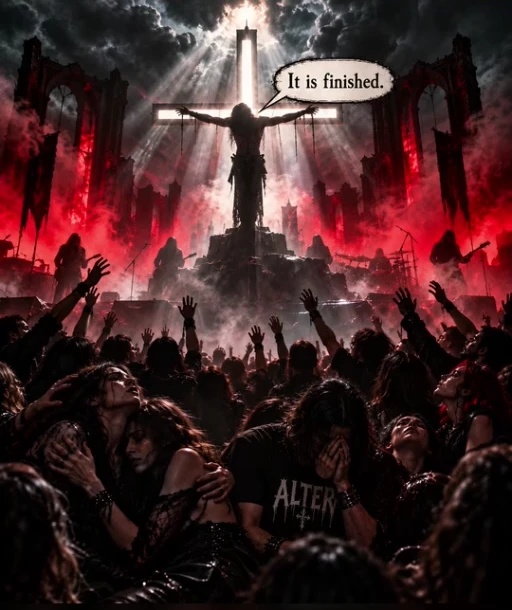
The Cross Reveals the Collision Between Love and Control
At its deepest level, the crucifixion reveals a collision between:
love,
and fear,
humility,
and ego,
compassion,
and control.
Jesus embodied truth wrapped in grace.
The system responded with self-protection.
That pattern still exists today.
Whenever religion becomes more focused on:
preserving power,
protecting image,
or controlling people
than loving them deeply, it begins drifting away from the spirit of Christ.
The Warning Still Matters Today
The story of Jesus and the religious leaders is not merely ancient history.
It remains deeply relevant.
Because every generation faces the same temptation:to love certainty more than humility,systems more than people,image more than honesty,and power more than compassion.
The frightening truth is that people can become deeply religious while slowly losing the heart of God.
That possibility should humble all of us.
The Invitation Beyond Fear and Control
Perhaps religious leaders feared Jesus because authentic love always threatens systems built on fear and control.
Grace threatens superiority.
Mercy threatens ego.
Humility threatens power.
And truth threatens performance.
But Jesus did not come merely to create more religious people.
He came to restore human beings.
To reconnect them with:
love,
truth,
grace,
compassion,
and God Himself.
And maybe the clearest sign of authentic spirituality is not how effectively people defend systems—
but how deeply they reflect the heart of Christ.

Explore the research, definitions, and limits behind the discussion →
There is room to keep seeking without pretending the hard parts have disappeared. May we offer one another wise companionship, patient grace, and a place to belong while the questions remain.
Wisdom · Unity · Grace