Why Religious Shame Cuts So Deep
Chris Cahill · 4 min read · First published 2026-05-19
Not all shame feels the same.
Religious shame often cuts deeper because it does not merely touch behavior.
It touches identity.
Worth.
Belonging.
And a person’s relationship with God.
When someone believes they are disappointing not just people—but the Creator Himself—the emotional weight can become overwhelming.
This is why religious shame can produce:
anxiety,
fear,
emotional paralysis,
perfectionism,
self-hatred,
and spiritual exhaustion.
And tragically, many sincere believers spend years trapped in cycles of shame while calling it holiness.
But shame and transformation are not the same thing.
Shame Attacks Identity, Not Just Behavior
Bring the part of the story that is difficult to say. There can be room for responsibility and repair without making humiliation the price of being heard.
Guilt says:“I made a mistake.”
Shame says:“I am the mistake.”
That difference matters enormously.
Healthy conviction may lead people toward:
growth,
repentance,
healing,
and restored relationship.
Shame attacks the self directly.
It whispers:
“You are defective.”
“You are unworthy.”
“You are too broken.”
“God must be disappointed in you.”
Over time, shame becomes emotionally corrosive because it disconnects people from love, safety, and self-worth.
Religious Shame Often Begins Early
For many people, religious shame forms during childhood.
Children are highly sensitive to authority, belonging, and fear.
If spirituality becomes heavily associated with:
punishment,
fear,
perfectionism,
or emotional control,
thoughts about God may become entangled with fear.
Bring the part of the story that is difficult to say. There can be room for responsibility and repair without making humiliation the price of being heard.
Children raised primarily through fear often become adults struggling with:
scrupulosity,
chronic guilt,
hypervigilance,
or emotional repression.
Not because they lack faith.
Because fear shaped their emotional experience of spirituality.
Shame Thrives in Fear-Based Systems
Some religious environments unintentionally reinforce shame constantly through:
public humiliation,
fear-driven preaching,
impossible standards,
purity culture,
conditional acceptance,
or constant emphasis on failure.
People begin feeling:
never good enough,
never holy enough,
never spiritually secure enough.
This creates chronic emotional tension.
Bring the part of the story that is difficult to say. There can be room for responsibility and repair without making humiliation the price of being heard.
anxiety,
depression,
addiction,
perfectionism,
emotional numbness,
and low self-worth.
Fear may create external compliance temporarily.
But shame rarely produces healthy transformation.
Jesus Frequently Opposed Shame-Based Religion
One striking reality in the Gospels is how often Jesus restored dignity to people carrying shame.
The woman caught in adultery.
Tax collectors.
Lepers.
The socially rejected.
The morally broken.
Again and again, Jesus moved toward ashamed people compassionately while confronting self-righteous religious systems harshly.
“Neither do I condemn you.” (John 8:11)
That statement does not deny accountability.
It restores dignity first.
Jesus corrected people without crushing their humanity.
Shame Often Creates Hiding Instead of Healing
One dangerous effect of shame is secrecy.
When people feel deeply ashamed, they usually hide:
struggles,
doubts,
addictions,
questions,
emotions,
or pain.
Bring the part of the story that is difficult to say. There can be room for responsibility and repair without making humiliation the price of being heard.
People become terrified of being truly known because they fear rejection.
This creates emotional fragmentation.
People perform spiritually while suffering internally.
But healing requires honesty.
And honesty becomes impossible where shame dominates.
Perfectionism Is Often Spiritually Rooted in Shame
Many Christians struggling with perfectionism are not driven primarily by discipline.
They are driven by fear.
Fear of:
disappointing God,
being rejected,
losing worth,
or failing spiritually.
Bring the part of the story that is difficult to say. There can be room for responsibility and repair without making humiliation the price of being heard.
But Christianity was never meant to be based on earning love through perfection.
Grace exists precisely because human beings are imperfect.
When shame stays with a person
Chronic shame affects the body physically and emotionally.
People carrying religious shame may experience:
panic,
obsessive guilt,
emotional shutdown,
hypervigilance,
intrusive thoughts,
or chronic anxiety.
This is especially true in environments where spirituality becomes connected to constant fear and self-monitoring.
The body learns emotional associations over time.
Rebuilding a sense of safety may involve time, trustworthy relationships, and professional care. Exploring grace can be part of that journey without becoming a substitute for treatment.
Adam and Eve Hid Because of Shame
One of the earliest biblical images of shame appears in Genesis.
After the fall, Adam and Eve hide.
Why?
Because shame creates fear of exposure.
Fear of being seen fully.
Fear of rejection.
But notice:God seeks them even while they are hiding.
That pattern matters deeply.
Because throughout Scripture, God consistently moves toward broken people rather than away from them.
Healthy Conviction Leads Toward Restoration
There is an important difference between conviction and shame.
Conviction says:“This behavior is harming you or others.”
Shame says:“You are unlovable.”
Conviction invites growth.
Shame creates despair.
The Apostle Paul wrote:
“God’s kindness is intended to lead you to repentance.” (Romans 2:4)
Notice:kindness.
Not humiliation.
Not emotional destruction.
Transformation rooted in love heals far differently than fear-based shame ever can.
Religious Shame Often Distorts the Image of God
People carrying deep shame frequently imagine God as:
angry,
impossible to please,
emotionally distant,
disappointed,
or constantly monitoring failure.
But Jesus consistently revealed something radically different:compassion,mercy,patience,and grace.
“A bruised reed he will not break.” (Matthew 12:20)
That verse matters profoundly for wounded souls.
Because it reveals tenderness rather than condemnation.
Healing Requires Relearning Grace
For many wounded believers, healing involves slowly learning:
they are allowed to be imperfect,
they are allowed to ask questions,
they are allowed to struggle honestly,
and they are still worthy of love.
Grace often feels uncomfortable initially to people conditioned by shame.
Why?
Because shame teaches people love must always be earned.
Grace says otherwise.
And that can feel almost unbelievable to wounded hearts.
The Invitation Beyond Shame
Perhaps religious shame cuts so deeply because spirituality touches humanity’s deepest longing:to be fully known and still fully loved.
Shame says:hide.
Grace says:come closer.
Jesus never invited people into emotional slavery through shame.
He invited them into healing.
Freedom.
Restoration.
Truth wrapped in love.
And maybe one of the most important spiritual realizations a wounded person can discover is this:
God is not waiting to destroy you for being imperfect.
He is inviting you out of hiding.
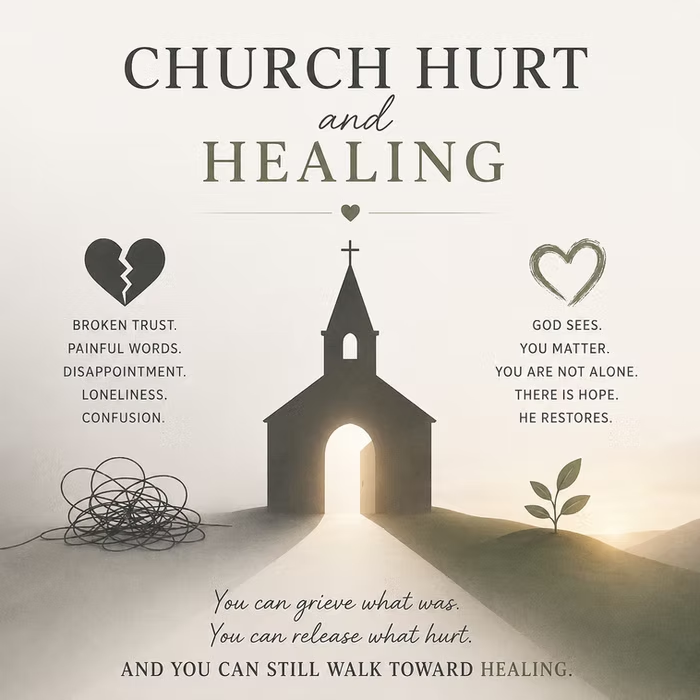
Explore the research, definitions, and limits behind the discussion →
Read a little further
There is room to keep seeking without pretending the hard parts have disappeared. May we offer one another wise companionship, patient grace, and a place to belong while the questions remain.
Wisdom · Unity · Grace