

Seven Claims to Examine
By Pastor Chris Cahill · 12 minute read · First published 2024-04-30
Seven Christian convictions. Seven invitations to examine what we actually believe. Put the claims alongside the life of love they should help form, rather than treating agreement as the finish line.
Seven convictions. More than seven boxes to tick. This reflection asks what central Christian beliefs mean for the way we live. Read the passages, ask honest questions, and consider whether our conduct gives those convictions something recognizable to stand on.
1. The Birth, Death, Resurrection, and Ascension of Jesus Christ.
Christian faith centers on Jesus: His birth, life, death, resurrection, and ascension. These claims belong together as a story of God’s love and redemption. The question is not only whether we can recite them, but how they shape our trust and our treatment of one another.
The birth of Jesus, celebrated every year as Christmas, is a testament to God's deep love for humanity. By taking on human form, God demonstrated his willingness to step into the world and offer salvation to all who would believe. The scriptures tell us that a virgin would conceive and give birth to a son, who would be called Immanuel, meaning "God with us." This miraculous event marked the beginning of a new era in human history, one in which God would be present among his people in a new and profound way.
At Easter, we remember the death of Jesus, often referred to as the crucifixion, the ultimate act of sacrificial love. By willingly laying down his life, Jesus atoned for the sins of humanity, providing a way for us to be reconciled with God. The scriptures tell us that he was pierced for our transgressions and crushed for our iniquities and that by his wounds we are healed. This act of love and sacrifice is the cornerstone of the Christian faith, providing believers with the hope of eternal life and the assurance of God's love.
The resurrection of Jesus is the pinnacle of the Christian faith, demonstrating his victory over sin and death. It's a moment of triumph that affirms his divinity and guarantees the hope of eternal life for all who believe. The scriptures tell us that if Christ had not been raised, our faith would be futile, and we would still be in our sins. But because he was raised from the dead, we have a living hope that transcends this life and extends into eternity.
The ascension of Jesus signifies his exaltation to the right hand of God, signifying his authority and lordship. It's a moment of great significance that paves the way for the sending of the Holy Spirit to empower believers. The scriptures tell us that Jesus was taken up before the eyes of his disciples and that he will come back in the same way he left. This event marks the end of Jesus' earthly ministry and the beginning of a new era in which believers are empowered by the Holy Spirit to carry on his work.
Return to the whole story of Christ rather than choosing the part that best serves an argument. Christian hope connects incarnation, sacrifice, resurrection, and lordship. Let that hope show up in a life of gratitude and service.
2. Christ Will Return Again Triumphantly.
Christians look toward Christ’s return with hope, even while disagreeing over the timeline. That expectation should keep us attentive and faithful today. A detailed chart is no substitute for doing the good that is already in front of us.
Firstly, the promise of Christ's return is a foundational element of Christian belief. His departure was accompanied by the assurance of His eventual return, providing hope and anticipation for believers. As Acts 1:11 states, "This Jesus, who was taken up from you into heaven, will come in the same way as you saw him go into heaven."
Secondly, the fulfillment of prophecies concerning Christ's return underscores the credibility of His teachings and affirms His authority as the Messiah. As Matthew 24:30-31 states, "Then will appear in heaven the sign of the Son of Man, and then all the tribes of the earth will mourn, and they will see the Son of Man coming on the clouds of heaven with power and great glory."
Thirdly, Christ's return carries the promise of final judgment and renewal, bringing justice to the world and establishing God's eternal kingdom. As Revelation 22:12 states, "Behold, I am coming soon, bringing my recompense with me, to repay each one for what he has done."
Fourthly, the uncertainty of the timing of Christ's return compels believers to live in constant readiness, maintaining a faithful and diligent lifestyle. As Matthew 24:42 states, "Therefore, stay awake, for you do not know on what day your Lord is coming."
Lastly, the anticipation of Christ's return unifies believers across denominational traditions, emphasizing shared core beliefs and ultimate hope in Christ's triumph. As 1 Thessalonians 4:16-17 states, "For the Lord himself will descend from heaven with a cry of command, with the voice of an archangel, and with the sound of the trumpet of God. And the dead in Christ will rise first. Then we who are alive, who are left, will be caught up together with them in the clouds to meet the Lord in the air, and so we will always be with the Lord."
Consider what readiness means in ordinary life: reconciliation, honesty, generosity, and care. Hope for Christ’s return should make us more faithful with today, not less concerned about it.
3. God is Sovereign.
The concept of God's sovereignty is another foundational and unifying element in the Christian faith. It reminds us that God is the Creator, Sustainer, and Redeemer of the universe and that His control extends to every aspect of creation and history. This belief is supported by relevant scriptures that highlight God's authority, love, and redemptive plan.
God's creative act establishes His authority as the ultimate source of all existence. Humanity, made in God's image, holds a special place in creation, reflecting His character and purpose. Despite the presence of sin and evil in the world, God's sovereignty is manifested through His plan of redemption. The sacrifice of Jesus Christ brings forgiveness and reconciliation to humanity.
Trust in God’s sovereignty can sustain hope when our own control is limited. It does not give us a script explaining the purpose of someone else’s suffering. Let confidence in God make us steadier and more compassionate.
The essential pillar of God's sovereignty over all creation transcends theological differences within the Christian faith. It unifies believers by highlighting God's authority, love, and redemptive plan. Let us trust in His sovereignty and find hope in His unfailing love.
4. We Can Trust in God and His Good Promises for Us
The Bible teaches us that God is always with us and will never abandon us. This powerful message of faith is a cornerstone of Christianity, resonating across different traditions and denominations. It brings comfort and hope to believers, reminding them that God has a plan for their lives and that they are never alone.
One of the most powerful promises in the Bible is found in Deuteronomy 31:6. Here, God tells us to be strong and courageous, and not to be afraid, because He is always with us. This promise is echoed in many other scriptures, reminding us that we can always rely on God's unfailing presence.
Another important promise is found in Jeremiah 29:11. Here, God tells us that He has plans for our lives, plans for our welfare, and not for evil. This promise gives us hope, even in difficult circumstances, reminding us that our lives have purpose and meaning. Romans 8:28 says it another way, "And we know that in all things God works for the good of those who love him, who have been called according to his purpose."
God also promises us comfort and strength in hard times, as well as guidance and direction when we are uncertain. In 2 Corinthians 1:3-4, we see that God is the Father of compassion and the God of all comfort. He comforts us in all our troubles so that we can comfort others in turn.
Finally, we are reminded of God's unwavering love for us. In Romans 8:38-39, “For I am convinced that neither death nor life, neither angels nor demons, neither the present nor the future, nor any powers, neither height nor depth nor anything else in all creation, will be able to separate us from the love of God,” we see that nothing can separate us from His love. This promise gives us the strength and courage to face any challenge, knowing that we are always loved and supported by our Creator.
Receive these promises with attention to their original setting and the wider Christian story. They offer hope, not a guarantee that every circumstance will resolve as we prefer. We can trust God while giving grief and uncertainty an honest hearing.
5. Love is the bedrock of the Gospel (Good News)
Love belongs at the center of the Gospel. We should be able to recognize it in our actions, not merely find it in our statements of belief. The passages below ask something concrete of us.
o God Is Love. 1 John 4:8 tells us that “Whoever does not love does not know God because God is love." The declaration that God is love establishes a profound truth about His character. Love is not just something God does; it is an essential aspect of who He is.
o God's Desires for Our Love. We read in Mark 12:30: "Love the Lord your God with all your heart and with all your soul and with all your mind and with all your strength." God's desire for our love reflects the reciprocal relationship He seeks with His creation. Loving God wholeheartedly aligns our hearts with His divine purpose.
o The Greatest Commandment. Matthew 22:37-39 says that "Jesus replied: 'Love the Lord your God with all your heart and with all your soul and with all your mind.' This is the first and greatest commandment. And the second is like it: 'Love your neighbor as yourself.'" The dual commandment to love God and love others encapsulates the essence of the Gospel. This directive calls believers to embody the same selfless love demonstrated by Christ.
o Love as a Fulfillment of the Law. In Romans 13:10: we are taught that "Love does no harm to a neighbor. Therefore, love is the fulfillment of the law." Love serves as the embodiment of righteousness and holiness. It surpasses mere legalistic observance, encompassing the essence of God's intentions for humanity.
o God's Ultimate Act of Love. In John 3:16 we are reminded "For God so loved the world that he gave his one and only Son, that whoever believes in him shall not perish but have eternal life." The pinnacle of God's love is manifested in the sacrificial gift of Jesus Christ. His death and resurrection embody the ultimate demonstration of divine love.
Choose one act of love that costs a little attention, time, or comfort. Offer it without needing an audience. The Gospel becomes easier to see when we stop treating love as a decorative word.
6. The Only Way to The Father, is Through the Son.
Christian confession centers access to the Father in Jesus Christ. This section considers the passages used to express His role as mediator and redeemer. Read them with care and keep Christ, rather than denominational one-upmanship, at the center.
John 14:6 makes it clear that Jesus is the exclusive path to the Father. He is the "way" through which humanity can approach God, the "truth" that reveals God's nature and salvation, and the "life" that grants eternal communion with the Father. Jesus' role as the mediator between God and humanity is highlighted in 1 Timothy 2:5-6, "For there is one God and one mediator between God and mankind, the man Christ Jesus, who gave himself as a ransom for all people." His sacrificial death on the cross serves as the means by which reconciliation and redemption are made possible.
Believers of all backgrounds gain access to the Father through Jesus, as Ephesians 2:18 explains, "For through him [Jesus] we both [Jews and Gentiles] have access to the Father by one Spirit." His work unites humanity and removes the barriers that separated us from God. Faith in Jesus is the channel through which believers enter into a reconciled relationship with the Father, as Romans 5:1-2 emphasizes. It reads, "Therefore since we have been justified through faith, we have peace with God through our Lord Jesus Christ, through whom we have gained access by faith into this grace in which we now stand." It is through this faith that we have peace and access to God's grace.
Prophecies in the Old Testament, such as Isaiah 53, foreshadow the role of the Messiah (Jesus) as the one who justifies and reconciles many to God. This fulfillment of prophecy further solidifies the importance of Jesus' role as the mediator between humanity and God.
These passages direct Christian hope toward Christ as mediator, reconciler, and redeemer. Let that confession deepen trust and humility. We can proclaim what we believe without pretending that every tradition explains every implication in the same way.
7. One Must Be Born Again in order to Enter The Kingdom of Heaven.
John introduces Nicodemus as a Pharisee and a Jewish leader who comes to Jesus at night. Their conversation quickly moves beyond status to the need for new birth. Read the encounter before supplying motives the passage does not state.
One night, Nicodemus approached Jesus, but why did he come under the cover of darkness? Was he afraid of being seen with Jesus and losing his status and wealth? Jesus cut straight to the chase and told Nicodemus that he needed to be born again to see the kingdom of God. Nicodemus took this literally and was confused about how he could physically be reborn. Jesus explained that being born again meant being born of water and the Spirit and that it was a spiritual rebirth, not a physical one.
Let’s read, “I tell you the truth, no one can see the kingdom of God unless he is born again” (Born again translates as “born from above” in Greek). Nicodemus takes Jesus’ words literally and questions a physical rebirth. Nicodemus said to him, “How can a man be born when he is old? Can he enter a second time into his mother's womb and be born?” Jesus answered, “Truly, truly, I say to you, unless one is born of water and the Spirit, he cannot enter the kingdom of God. That which is born of the flesh is flesh, and that which is born of the Spirit is spirit. Do not marvel that I said to you, ‘You must be born again.’” (John 3:4-8)
Jesus was amazed that Nicodemus, a brilliant teacher, didn't understand this concept, and reminded him of the Old Testament story of Moses and the Bronze Serpent. Just as the bronze serpent was lifted up on a pole and saved the people from death, Jesus would be lifted up on the cross to save people from eternal death. Jesus then dropped one of the most well-known and revered Bible verses of all time: "For God so loved the world that he gave his one and only Son, that whoever believes in him shall not perish but have eternal life.” (John 3:16)
The concept of being born again is a powerful and deeply spiritual one in the Christian faith. It's fascinating to see how different denominations interpret and understand this experience in their own unique ways. Some believe that it's closely tied to the Sacrament of Baptism, while others view it as a personal decision to accept Christ as their Lord and Savior.
People describe coming to faith in different circumstances, from childhood teaching to a season of struggle. Do not prescribe a dramatic conversion story as the standard everyone must meet. Attend to the life being shaped in Christ.
Regardless of the specific denomination or experience, the common thread that ties us all together is the transformative power of a new life in Christ. This journey is marked by a deepening sense of holiness, a closer communion with God, and a life lived in the light of faith. As 2 Corinthians 5:17 reminds us, "Therefore, if anyone is in Christ, the new creation has come: The old has gone, the new is here!"
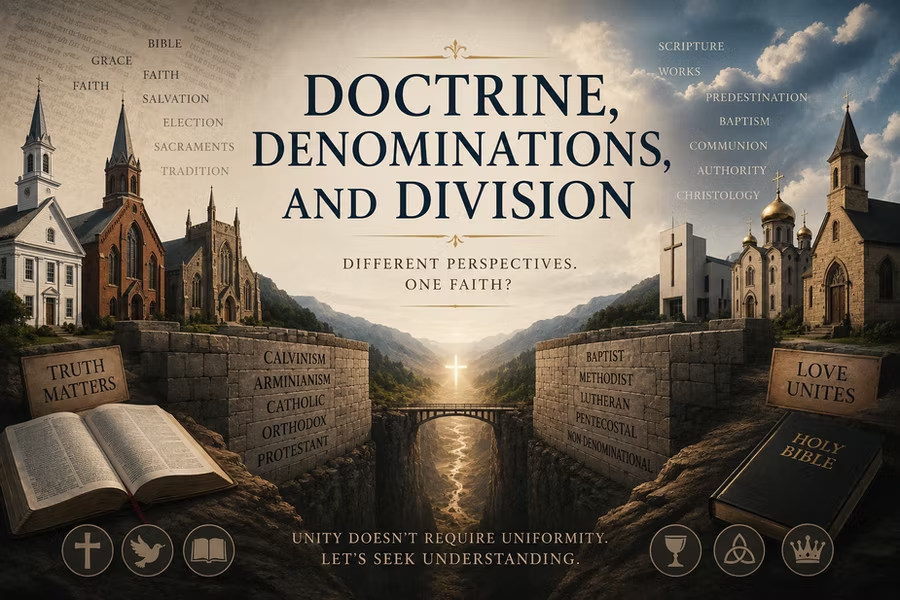
Explore the research, definitions, and limits behind the discussion →
Faith, hope, and love in action through Christ and kindness. Raise a Hand. Build a Bridge. Find a local ministry and put what you believe into practice.
Faith, hope, and love in action through Christ and kindness.






