
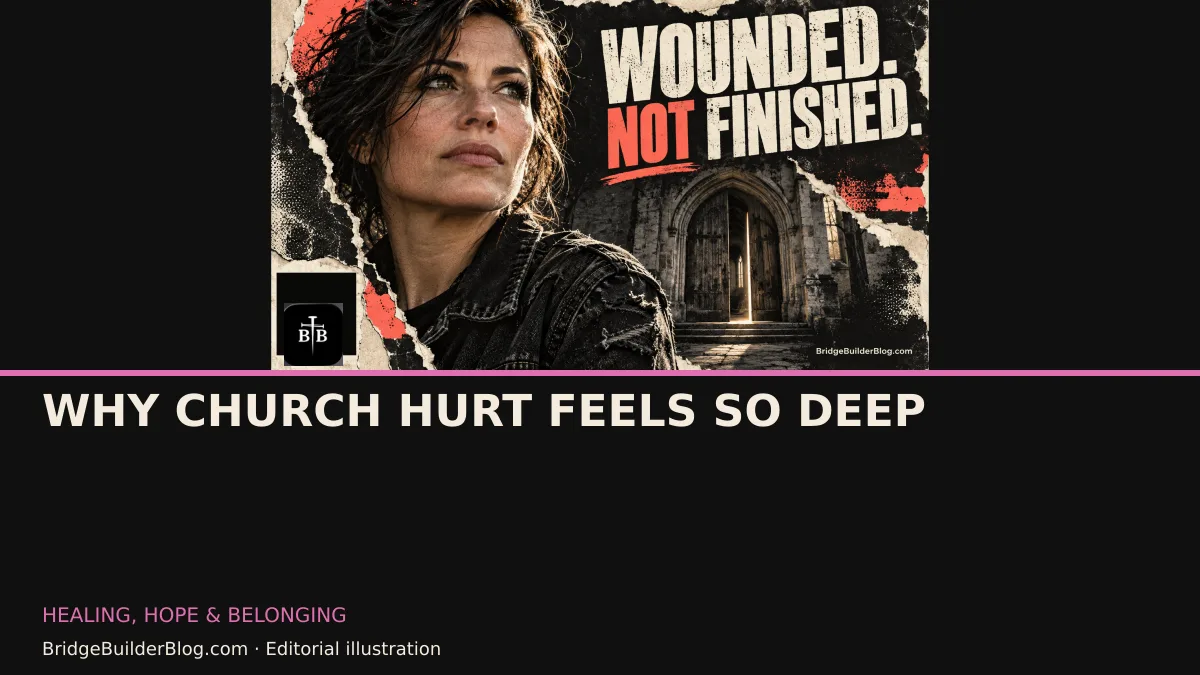
Why Church Hurt Feels So Deep
By Pastor Chris Cahill · 3 minute read · First published 2026-05-19
When a place that taught us to trust becomes a place we fear, the hurt reaches deep. Church can be tied to family, identity, belonging, and our understanding of God. A broken promise there may shake far more than our Sunday plans.
Church Was Never Supposed to Feel Unsafe
At its best, church offers grace, truth, compassion, accountability, and belonging. We should be able to bring our burdens without having to audition for care. Jesus gives this invitation:
“Come to me, all you who are weary and burdened, and I will give you rest.” (Matthew 11:28)
When a community instead brings shame, manipulation, exclusion, or betrayal, something precious has been mishandled. Calling that pain “oversensitivity” only adds weight to the wound.
Why Spiritual Pain Feels Different
If this is your story, take your time. You deserve a patient hearing and trustworthy support. When church life is woven into family, purpose, and faith, betrayal can leave us unsure whom to trust, including God. Naming that struggle is honest, not disloyal.
Church Hurt Is Often About Betrayal
Some people leave because leaders manipulated them, gossip spread, questions were shamed, or abuse was ignored. Others describe years of feeling unseen or controlled. We must listen before assigning a motive.
Churches invite people to confess struggles and open their hearts. That trust brings responsibility. We cannot ask for vulnerability and then punish someone for being vulnerable.
Even Jesus Experienced Religious Betrayal
The Gospels describe Jesus facing rejection, condemnation, and betrayal by one of His own disciples. Christians can look to Him while acknowledging that religious communities fail. Keeping Christ distinct from those failures may take time; nobody should be hurried through it.
When spiritual hurt reaches into daily life
Some people describe trauma after experiences of control, humiliation, manipulation, or abuse in religious settings. Prayer, music, or a church building may then remind them of what happened. We should not diagnose from a distance or assume every person responds alike.
Patient support matters. A pastor can listen and help someone find appropriate care without pretending pastoral care replaces professional treatment.
Religious Performance Can Exhaust the Soul
Years of trying to look strong, joyful, certain, and spiritually “together” can also wear people down. Some quietly carry grief, doubt, depression, or loneliness because honesty does not feel welcome. If we reward the performance and ignore the person, we have work to do. Jesus moved toward people who were struggling.
“Blessed are the poor in spirit.” (Matthew 5:3)
We do not need a flawless image before we can come to Him.
Forgiveness Does Not Mean Pretending the Hurt Was Small
Forgiveness must never become a shortcut around truth. The Psalms make room for grief, anger, confusion, and lament:
“How long, Lord?” (Psalm 13:1)
Scripture makes space for emotional truth.
Forgiveness does not make abuse acceptable, erase boundaries, or require continued exposure to harm. Protection and accountability belong in the conversation. Nobody should use spiritual language to hurry someone back into danger.
Leave room for truth beyond the wound
Pain can make it hard to believe any church or Christian is trustworthy. We can understand that response without declaring every community guilty. Human failure does not excuse harm, and it does not exhaust everything Christianity has to offer. Let us hold both truths with care.
What Healing Often Looks Like
Healing may involve grieving, boundaries, therapy, quiet spiritual practices, and slowly rebuilding trust. Loyalty to God does not require blind loyalty to an institution. Jesus asked:
“What do you want me to do for you?” (Mark 10:51)
That question honors pain instead of dismissing it.
One safe step at a time
You do not have to pretend the hurt was small to take a step forward. Tell one trustworthy person what you need. That might be space, a hearing, help finding care, or support holding a boundary.
For those of us in church leadership, the next step may be harder: listen without defending our image, acknowledge the harm, and follow through on repair. We cannot preach shelter while ignoring the leak. Christ’s kindness calls us to better.

Explore the research, definitions, and limits behind the discussion →
Faith, hope, and love in action through Christ and kindness.
Read a little further
Wisdom · Unity · Grace






