Ancient Faith Is Not a Vintage Shop
The Didache is more than a decoration for our preferred tradition. Read the welcome, the challenge and the limits of the evidence.
By Pastor Chris Cahill · 4 minute read · Reflection
Ancient faith gets practical fast. Open the Didache and you find prayers alongside questions about conduct, guests, and community. Apparently, what we do after worship belongs in the conversation too.
The Didache gives us such a window. We can read its words slowly, with gratitude for the voices before us and care for the lives beside us now.
Read the text before recruiting it
The document opens with the image of two ways and instructions concerning conduct. Chapter 7 discusses baptism, including alternatives when preferred water is unavailable. Chapter 8 gives a pattern for prayer. Chapters 9–10 include thanksgiving prayers.
Chapters 11–12 address visiting teachers and hospitality; chapter 14 connects the gathering with reconciliation. These passages place practical life beside worship. The text should be read in full, including the passages that challenge us.
Receive an inheritance with care
The title alone cannot establish that the twelve apostles wrote it. Nor can one document tell us that every early church did everything the same way. We should read this witness carefully without giving it a job bigger than the evidence can carry.
Some details feel familiar; others need context and may provoke disagreement. The text also sets boundaries on participation. We cannot claim ancient roots while trimming away every awkward branch.
Ask what the practice reveals
Put worship beside reconciliation and ask what changes. How should we welcome a visiting teacher while still exercising judgment? What do our habits reveal that our statements of belief manage to hide? Let the questions reach our own doorstep.
These are reflective questions arising from the reading. They are not a claim that we can transplant every ancient instruction into contemporary life without interpretation.
Choose one chapter. Read it slowly, then compare its concerns with a relevant Gospel passage. Discuss both what attracts you and what troubles you. Ancient roots deserve the same intellectual honesty we ask of contemporary faith.
Read one chapter, compare it with a Gospel passage, and discuss both the welcome and the challenge you find. Then choose one way to practice care for a living neighbor. Ancient roots should bear present fruit.
Read a little further
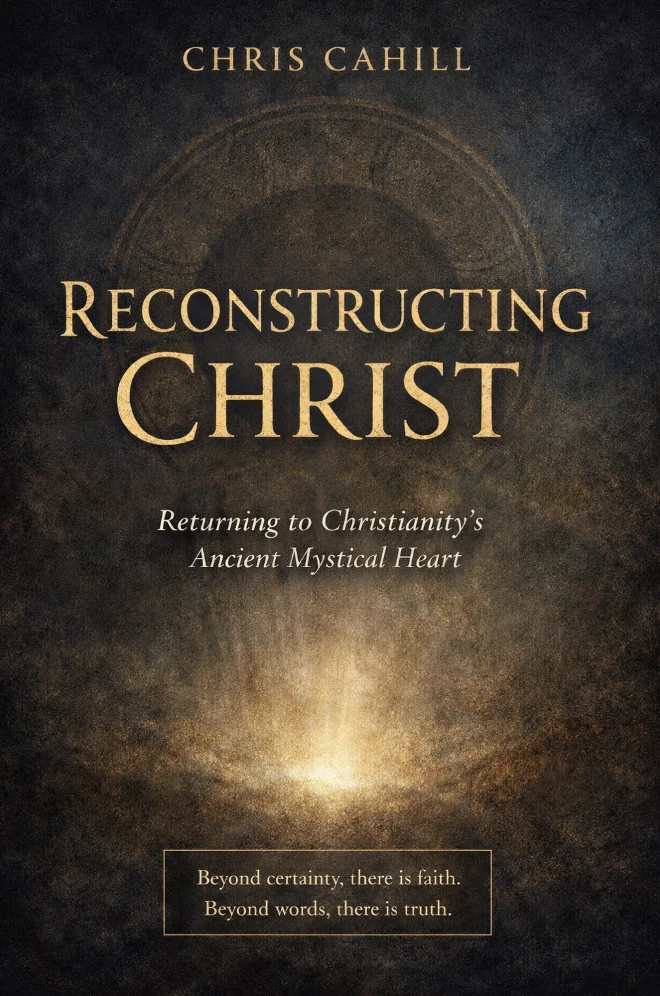
- Book context: Reconstructing Christ
- The Didache, chapters 1, 7–12, 14 (M. B. Riddle translation) ↗
Related book: Reconstructing Christ
Ancient does not mean convenient
We can treat the early church like a vintage shop: choose the prayers we like, leave the uncomfortable instructions on the shelf, then announce that we have recovered authentic Christianity.
That is not history. It is shopping.
The better question is what this witness can teach us when it does not sound exactly like our congregation. A Catholic, Orthodox, Baptist or Methodist reader may notice different points of familiarity and tension. Each should explain the reasoning rather than using the text as a trophy for their own tradition.
One early document is evidence. It is not a recording of every Christian community everywhere. That limit does not make it useless. It makes careful claims possible.
Hospitality does not require switching off your judgment
The combination of welcome and discernment is worth bringing into our own lives. We can be generous without making every claim credible. We can question a teacher without being cruel. We can help a stranger without pretending that practical boundaries are a failure of faith.
Those are contemporary applications, not an assertion that an ancient manual anticipated every modern safeguarding question. The distance between their setting and ours needs interpretation, not denial.
Likewise, an invitation to reconciliation must never become pressure to resume an unsafe relationship. Reading an ancient text responsibly includes asking what a faithful application would require for actual people now.
So what? Give ancient roots a present address
Choose a short section and discuss two questions: what does this challenge in our current habits, and what would need more historical context before we applied it?
Then act on one concern that is clear enough to practice responsibly: tell the truth, repair a wrong, welcome someone thoughtfully or give practical help. We do not honor earlier Christians by turning their writings into decorations. Let the inheritance disturb our complacency without pretending it cancels every disagreement.
Bridge building is not a contest to have the oldest-looking toolbox. It is doing useful work with enough humility to keep learning how.
Faith, hope, and love in action through Christ and kindness.