
READ ALONGSIDE THE MISSION
Everyday Evangelism
Share faith. Don’t make people projects. A practical companion for listening well, serving honestly, and letting the Gospel travel through genuine relationships.
View on Amazon → BRIDGE
Bring what still works. Gospel. Literacy. Food. Presence. Hope.
Greg Crandell and his team are preparing to return to La Mosquitia and Montaña de La Flor with food, essential supplies, and teaching materials. Alongside practical help, the team plans to share the life of Christ visually and help children begin learning to read.
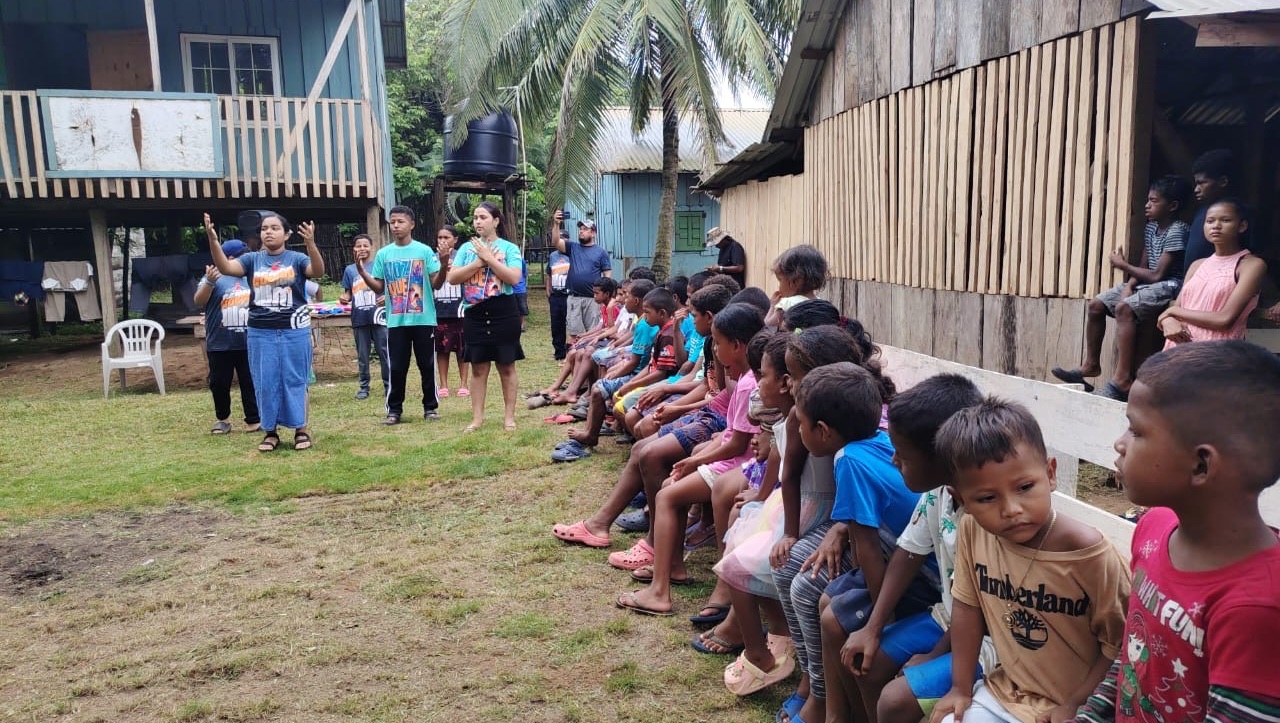 Photo shared on Greg Crandell’s GoFundMe campaign
La Mosquitia is one of Central America’s most isolated regions. Roads, markets, electricity, health care, and government presence can be limited. That same isolation has also made the region useful to drug-trafficking and other criminal networks for decades.
The people are not the problem. Isolation is the problem. Indigenous communities can be squeezed between poverty, weak infrastructure, land pressure, and criminal economies they did not create.
Research basis: U.S. State Department reporting on La Mosquitia as a trafficking corridor; World Bank analysis of severe infrastructure and market-access gaps; InSight Crime investigations into trafficking, illegal roads, land pressure, and narco-cattle ranching.
La Mosquitia includes Miskito and other indigenous peoples. In Montaña de La Flor, many Tolupan families continue to speak Tol. Honduras officially recognizes bilingual and intercultural education for indigenous communities.
Language is not a barrier to work around. It is part of the people we are serving.
So BridgeBuilder will not build a Spanish-only “jungle curriculum” in Florida and assume it fits. The first step is to identify the village, language, local teacher or pastor, and actual literacy need. Then a suitable partner can help shape simple lessons around that reality.
Don’t bring technology. Bring capability.
Teach the teacher. Leave the tools. Come back and improve.
This is BridgeBuilder’s developing vision, not a claim that a complete field-literacy program is already operating. The LEAP Initiative could help shape learning resources, Greg could connect the field needs, and local leaders would guide what is useful. Any materials or teaching plan should be developed with the communities involved.
This can begin with fifteen-minute lessons: letter sounds, simple words, numbers, pictures, read-aloud stories, and repeatable activities that require almost no equipment.
Where technology genuinely helps, offline platforms such as Kolibri or RACHEL can eventually carry larger libraries without internet. But only after the community has a local champion, a workable power plan, and a reason to use them.
Greg is a missionary, so the Gospel belongs in the mission. But the method matters. Serve first. Listen well. Respect language and culture. Share Christ without treating a person as a project.
Miskito Scripture resources already exist in audio and other formats, and Tol New Testament audio resources are also available. We can carry Gospel material that people can actually hear and understand — but only with local guidance about what is welcome and useful.
Go. Listen. Serve. Share.
Scripture anchor: Matthew 28:19–20 calls Christians to make disciples among all nations; the command includes teaching, not merely arriving. BridgeBuilder pairs that with Jesus’ pattern of seeing and serving people as people.
Every trip should answer four questions: What did the village ask for? What did we leave behind? Who can keep using it? What changed before we return?
Go where the road ends. Bring what still works.
Greg’s “Food and Hope for Children in Honduras” campaign supports food, essential supplies, teaching materials, and the rental vehicles and fuel needed to reach remote communities. Gifts are made on GoFundMe to the campaign organized by Greg Crandell. Read his full story and campaign updates before deciding to give.
Share faith. Don’t make people projects. A practical companion for listening well, serving honestly, and letting the Gospel travel through genuine relationships.
View on Amazon →