God Is Bigger Than Your Explanation
What if knowing about God opened into a life of prayer, attention, and love?
Chris Cahill · 5 min read · Reflection
Sometimes we know many things about God and still long to draw near. We have the words, the books, the familiar prayers. What we miss is the closeness those words were meant to help us seek.
Christian mysticism speaks into that longing. Here, it means turning toward communion with God through Christ, prayer, quiet attention, and a love that reaches the people around us.
What Christian mysticism means here
In this article, Christian mysticism describes a pursuit of encounter and communion with God, rooted in Christ and expressed through prayer, contemplation, and love of neighbor. It is a broad term. Christian traditions do not explain every aspect of that pursuit in the same way.
Contemplation is one doorway: attentive prayer in which we make room to listen and remain present to God. The Catholic Catechism describes contemplative prayer as attention to Jesus, listening, and participation in his prayer. Orthodox teaching speaks of theosis—participation in divine life through grace. These are related ways of speaking, with distinct theological histories.
Neither description requires us to treat God as a possession or our spiritual experiences as proof that we are better than anyone else.
Ancient roots deserve careful reading
The Bible gives us language of abiding in Christ (John 15:4–5), Christ living in the believer (Galatians 2:20), and participation in the divine nature (2 Peter 1:4). Christians have reflected on these passages in different ways across the centuries.
Ancient Christianity was diverse. The mystical tradition is part of that inheritance, and it deserves attention without pretending that every early Christian shared one interpretation.
We can learn from older voices while asking the same questions we ask of contemporary teachers: What is the source? What does it mean in context? What is interpretation? What does this teaching invite us to practice? Reverence for tradition should deepen inquiry.
Mystery does not cancel reason
Mystery begins with the recognition that our knowledge has limits. It does not make every claim equally credible.
We can listen to a spiritual experience with care, read what supports a teaching, and leave room to understand it differently. Wonder need not silence someone who has been hurt. Their story deserves to be heard too.
A thoughtful faith can admit uncertainty while holding convictions. ‘This is what I believe, and here is why’ leaves room for conversation. It also leaves room for us to learn.
The measure is the life
An unusual experience may feel powerful. Spiritual language may sound profound. Neither tells the whole story of a person’s growth.
Galatians 5:22–23 directs attention to qualities such as love, patience, kindness, and self-control. That gives us a practical question: is our spiritual life making us more attentive to others, more willing to repair harm, and less dependent on being admired?
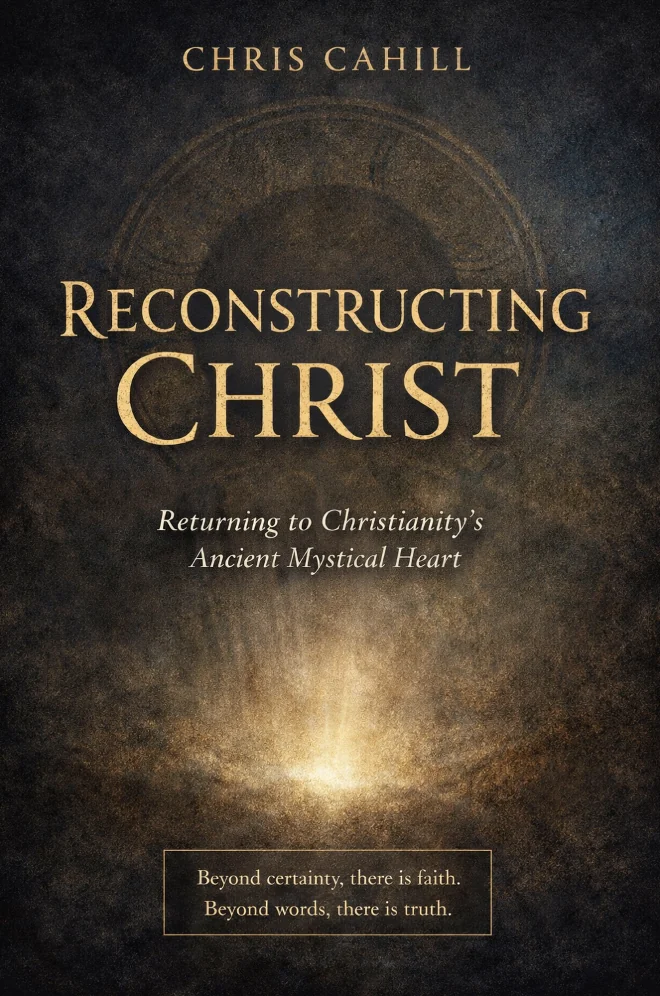
Reconstructing Christ examines this danger: mysticism can become another badge of superiority. The label has failed when it helps us look down on someone rather than love them.
The kitchen, the difficult conversation, and the neighbor we tend to overlook are places where our beliefs become visible.
Begin with a few honest minutes
Read John 15:4–5 slowly. Sit comfortably for two or three minutes. You can offer a simple prayer: ‘Jesus, help me be present to you.’ When your attention wanders, return gently. There is no special feeling you must produce.
Then choose one ordinary act of care: listen without interrupting, repair a strained conversation, or share something with a person in need. Let attention become action.
Begin gently, without asking yourself to produce a special feeling. You can explore more deeply with a trusted spiritual guide and by reading traditions in their own words.
Begin gently. Bring your real life into prayer, and let that attention travel with you into the next small act of love.
Read a little further
- Catechism of the Catholic Church, contemplative prayer, §§2709–2724 ↗
- Orthodox Church in America, The Holy Trinity in Christian Life ↗
- Scripture: John 15:4–5; Galatians 2:20; 2 Peter 1:4; Galatians 5:22–23
- John 15:1–5 — read the passage in context
Related book: Reconstructing Christ
Wisdom · Unity · Grace